It is the custom of the Simple Way community to start the day with a common prayer at eight. After arriving in Philadelphia very tired, I realized that I am travelling very lightly (on purpose) and thus have neither a watch nor an alarm clock with me. How am I going to meet the community on time with my internal clock influenced by time zone changes and the tiredness from traveling on a train overnight?
I eventually figured out the technical part. I can use my Swiss cell phone as a timekeeper and alarm clock. But what I experienced was so much nicer: Fifteen minutes before the set time, a sparrow landed on the air conditioning unit that is installed in the window right next to my bed. The little bird started to happily chirp away for a few minutes. This unspectacular bird song was waking me up gently.
What a contrast to the repeat sirens from emergency vehicles, mixed in with the low rumble of the elevated subway system, and the cacophony of neighbourhood sounds and voices that is an almost constant companion in the background.
I am grateful for the little bird. It came back again this morning, right on time, to remind me of the beginning of another beautiful day in an unfamiliar city. Let the prayers begin.
In the universe’s infinite wisdom, we have so many chances to start anew. During the past week, I had the opportunity to get down to the floor, to pick up the little toys and enjoy the excitement of learning processes together with the toddlers. What is simple about the complexity of a four-wheeled cart, a wooden tower of tracks with holes, gravity, friction, direction, and interfering hands of a cousin? These are all learning opportunities for interaction, relational practice, personal development, and exploring the world around us. Continue reading “The calendar says, let’s start again (+de)”→
Invite somebody to read - Lade jemand zum lesen ein:
Affluenza: 1. A painful, contagious, socially transmitted condition of overload, debt, anxiety and waste resulting from the dogged pursuit of more. 2. The bloated, sluggish and unfulfilled feeling that results from efforts to keep up with the Joneses. 3. An epidemic of stress, overwork, waste and indebtedness caused by the pursuit of the American Dream. 4. An unstable addiction to economic growth. (from www.affluenza.org)
and a possible therapy approach:
Degrowth: the intentional redirection of economies away from the perpetual pursuit of growth. For economies beyond the limits of their ecosystems, this includes a planned and controlled contraction to get back in line with planetary boundaries, with the eventual creation of a steady-state economic system that is in balance with Earth’s limits.
from: Serge Latouche, “Growing a Degrowth Movement,” in Worldwatch Institute, State of the World 2010 (New York: W. W. Norton & Company, 2010), p. 181
for more thoughts on the condition of affluenza, click here: Affluenza
Invite somebody to read - Lade jemand zum lesen ein:
How often do we portray traditions as the solid anchors of cultural and societal systems? But how solid and powerful are they really?
Sure they provide us comforts. Like our own family Christmas celebrations: We moved from Switzerland to the Yukon and ended up living on the margins of First Nations villages for many years. Because our children were young, we started to celebrate Christmas – something I have rejected doing in my young adult years.
The only tradition that we adopted for the Christmas holiday during those years was a late night visit to the barn on Christmas Eve. There we treated the farm animals with apples as a bedtime snack. The rest of the year it was hay and water. I never really understood whose tradition it was, but it suited my need to mark what perverted into a commercial holiday with something that was meaningful to me.
A simple message of peace.
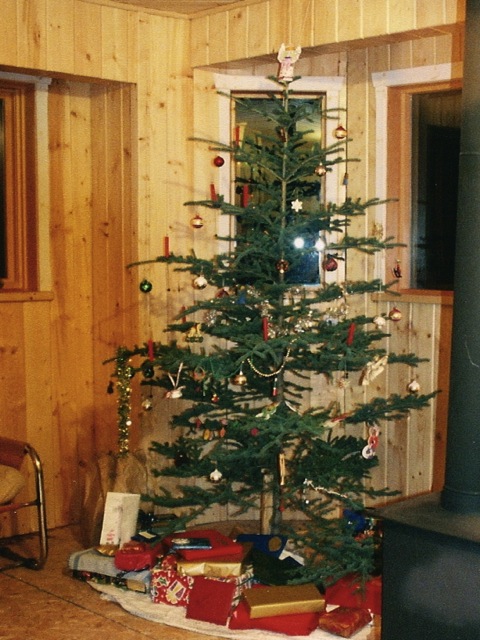
The first winter out in the bush in Canada we discovered that the family celebrations here happened on Christmas day, while our tradition was on Christmas Eve. To this day, we maintain the Swiss tradition and it feels right. Real tree, real candles. Ox and donkey became moose and caribou.
While living in the small remote communities, there was also a distinct advantage to having two different timing traditions for the festivities. I was always on call for a variety of emergency services. I got to turn off my radios on the 24th, while my colleagues of the British/North American and First Nations traditions took call. Then on the 25th, I took all calls while the turkeys and hams were roasting and being shared among families. That way, nobody had to miss his or her traditional celebrations due to an emergency response.
It is remarkable to see how our adult children, who grew up in Canada, to this day never questioned the diversity in tradition and seem to be comfortable being ‘outsiders’ in a world dominated by Santa Claus and electrified Christmas trees that get discarded the day after we decorate ours and light the candles for the first time! They hardly know the biblical story that has informed our and our ancestors’ understanding of Christmas; nonetheless, they are now adopting a unique form of a celebration that has a strong connotation to the concern for others, to light, to seasonal change, and thus solstice more than birth of Christ.
Peace to the World – Frieden auf Erden!
Sämtliche Traditionen haben einen Anfang, und alle Traditionen können und werden sich ändern.
Wie oft haben wir Traditionen als den festen Anker der kulturellen und gesellschaftlichen Systeme porträtiert? Aber wie solide und stark sind sie wirklich?
Sicher, sie bringen uns Trost. So wie unsere eigenen Weihnachtsfestlichkeiten in der Familie: Wir sind aus der Schweiz in den Yukon umgezogen und lebten am Rande der First Nations Dörfer für viele Jahre. Da unsere Kinder klein waren, fingen wir an Weihnachten zu feiern – etwas, was ich als junger Erwachsenen abgelehnt hatte.
Die einzige Tradition, die wir in jenen Jahren für die Weihnachtsfeiertage übernahmen, war ein nächtlicher Besuch im Stall am Heiligabend. Wir brachten den Tieren Äpfel als Feiertagsschmaus. Den Rest des Jahres gab es Heu und Wasser. Ich habe nie wirklich verstanden, wessen Tradition es war; aber es deckte mein Bedürfnis einen Tag im Jahreszyklus bedeutungsvoll zu markieren, welcher ansonsten in einen kommerziellen Festtag pervertiert wurde.
Eine einfache Botschaft des Friedens.
Den ersten Winter draußen im Busch in Kanada haben wir entdeckt, dass die Feierlichkeiten hier am Weihnachtstag angesagt sind, während unsere Tradition auf den Heiligabend fällt. Bis zum heutigen Tag erhalten wir die Schweizer Tradition und es fühlt sich so richtig an. Einen echten Baum, mit echte Kerzen. Der Ochse und der Esel wurden zum Elch und dem Karibu.
Die zwei unterschiedlichen Zeitpunkte für Festtagstraditionen hatten in den kleinen abgelegenen Gemeinden auch einen deutlichen Vorteil. Ich war immer auf Abruf für verschieden Notfalldienste. So konnte ich am 24. meine Funkgeräte abschalten, weil meine Kollegen von den britischen / nordamerikanischen und First Nations Tradition auf Piket waren. Dann am 25. übernahm ich Bereitschaftsdienst während die Puten und Schinken gebraten wurden und die Familien feierten. So musste niemand seine traditionellen Festlichkeiten wegen eines Notrufs verpassen.
Es ist bemerkenswert zu sehen, wie unsere erwachsenen Kinder, die in Kanada aufgewachsen sind, bis zum heutigen Tag die Vielfalt der Traditionen nie in Frage gestellt haben. Sie scheinen zufrieden zu sein mit ihrem `Aussenseiter´ Status in der von Santa Claus und elektrifizierten Christbäumen dominierten Umgebung. Die Christbäume werden hier am Tag nachdem wir unseren schmücken und die Kerzen zum ersten Mal entfachen, weggeworfen.
Sie sind kaum vertraut mit der biblischen Geschichte, die unser Verständnis und das Verständnis von Weihnachten unserer Vorfahren geprägt hat; dennoch haben sie nun diese eigenartige Form der Feierlichkeiten übernommen, als etwas das einen starken Bezug zur Sorge für Andere hat; etwas das sich aufs Licht und die saisonalen Veränderungen und damit der Wintersonnenwende mehr bezieht als auf Christi Geburt.
Peace to the World – Frieden auf Erden!
Invite somebody to read - Lade jemand zum lesen ein:
I am holding my mother in the Light and wish her the strength for healing and recovery from the various setbacks in recent days.
Ich bete für meine Mutter, dass sie die Kraft findet zu genesen und sich zu erholen von den verschiedenen Rückschlägen die sie in den letzten Tagen erlebt hat.
Invite somebody to read - Lade jemand zum lesen ein:
“Walking Home – A contemplative journey along the Yukon River” is a short film conceptualized, directed, and produced by Othmar F. Arnold, with feedback and support from Celia McBride; filmed in Whitehorse, Yukon (Canada).
A Sorry State (für eine deutsche Teilübersetzung klicke hier: Ein leider Zustand)
Last week, the Available Light Cinema film series in Whitehorse screened the new documentary by local director Mitch Miyagawa with the catchy title “A Sorry State”. Indeed, much of what we read in the news about politics, be it at the level of the territorial government, the federal government, or many national governments around the world, supports the impression that this world is in a sorry state.
But do not fear: I am not going to write a lament about our current political situation. I’ll leave that for other writers in local newspapers that dared to describe our cage-fighting MP a sock puppet of the Prime Minister… (Yukon News)
The sorry state in Miyagawa’s film refers to the various apologies his extended family has received over the last decade from the government of Canada for political wrongs of its colonial history: Continue reading “A sorry state – the loss of democracy (+de)”→
Invite somebody to read - Lade jemand zum lesen ein:
Celia McBride released the teaser for her feature film production Last Stop for Miles. It is available on YouTube.
“When running away brings you back…”
The feature is expected to be released in spring 2013. For more information on the movie and its production on location in the Yukon, visit: Last Stop for Miles
For a list of cast and crew, please go to the credits page.
Invite somebody to read - Lade jemand zum lesen ein:
It looks like many readers have seen and hopefully enjoyed the initial posting on the “Teach me to stop and listen” song that was shared with the Whitehorse Worship Group by the Quaker Worship Group in Lucknow, Ontario. Next Sunday, our group will practice and sing the song for the first time at the beginning of our monthly meeting for worship.
As I experiment will all kinds of social networking sites (and learn from my children who are much more proficient users), I was able to upload the simple recording of my own arrangement of the song that I wrote about a few days back on this blog. Continue reading “Teach me to stop and listen again”→
Invite somebody to read - Lade jemand zum lesen ein:
Experiments in living – multicultural lichen colony with a funny face on Boothia Peninsula, Nunavut.
Today, I got drawn into an online conversation. It started with the following blog entry: Experiments in Living and its subsequent exchange of replies that eventually touched on the issue of need and structure of government. From the exchange I got the sense that government seems to be categorically opposite to the notion of liberty, as well as that certain national governments are being viewed as completely separate from and in opposition to the population. For me the latter seems peculiar and indicates a fundamental flaw of existing government structures. I have posted earlier some of my own thoughts about governance under the heading leadership and power – not authoritarian rule and legalized force.
Here I will share with you my reply to the above-mentioned online dialogue:
Dear Malcolm,
I am not sure if smaller government is my preferred vision in general.
Membership and belonging are important factors for well-being on an individual level. It is a topic that resonates strongly with me for a long time. In 2004/05, I have written an article on community membership and belonging from a nursing perspective with a particular focus on cross-cultural practice in indigenous communities. It was never published, but might be of interest to some.
Nursing practice with Aboriginal communities: An exploration of the question of membership.
Othmar F. Arnold, RN, MN,
Abstract
For most nurses working with Aboriginal people, such a posting is a professional challenge. Nurses do not hold any formal membership in the cultural and ethnically diverse communities they serve. The importance is placed on competent and efficient delivery of needed services for populations that are known for significant health disparities and marginalization. Drawing from Nuu-chah-nulth origin stories, it appears to be important for the realization of Aboriginal health, healing, and well being that health professionals acquire community membership. The difference between the two world views poses an ethical dilemma, possibly constituting a form of cultural imperialism. Nursing science based approaches for bridging the intercultural gap are explored.
Health Centre, Carmacks, Yukon, serving the Village of Carmacks and the Little Salmon/Carmacks First Nation




 OFRADIX