More than twenty years ago, I read an explanation of what your name meant: It was deemed an Ojibway term for the Dene, indicating a people that is not the way they are. Sure sounds like what the Romans called the inhabitants of rest of the world: barbari!
Happy Birthday, Athabasca! Celebrate, enjoy, and stay safe!
I wish you all the best in your academic and artistic endeavours. May you find your niche in this highly complex and not always welcoming world for those who are unique and allow themselves to express themselves freely.
And remember, I want to continue to support you on your life journey, as your father, your friend, and your mentor. I will keep you in my thoughts during my journey and pilgrimage. I will also hold you in the Light so you may experience the divine love. Even if you feel you are not the way we are, your are still embraced by the All-loving.
Invite somebody to read - Lade jemand zum lesen ein:
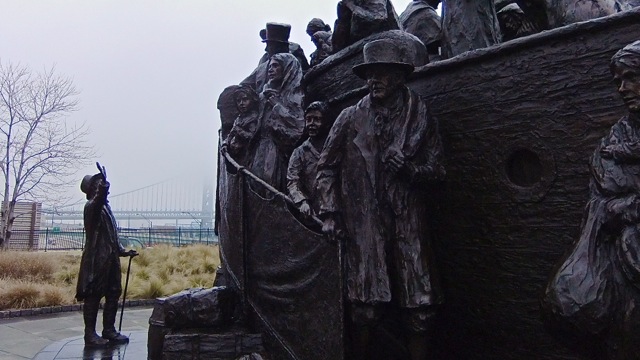
It’s time to leave.Port of Philadelphia, but definitely the wrong ship…(or maybe just the wrong century)
It is time again to move on. Today, I am boarding the ship for Europe. – Es ist Zeit zum Aufbrechen. Heute gehe ich an Bord für die Seefahrt nach Europa.
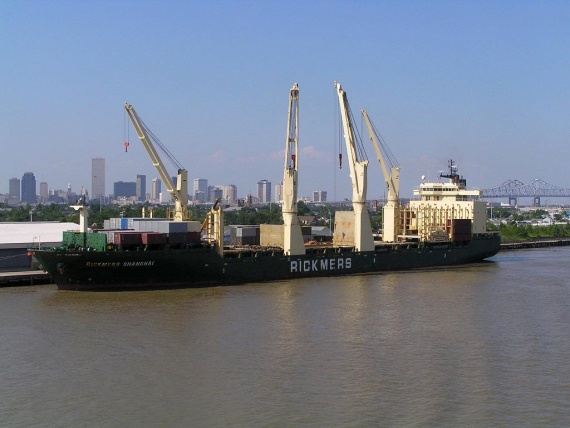
MV Rickmers Shanghai in port (photo credit: Captain Peter)
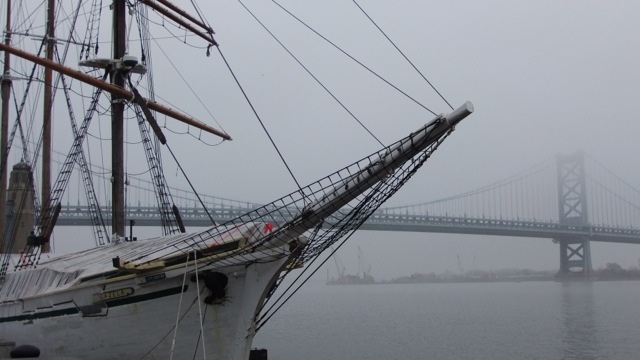
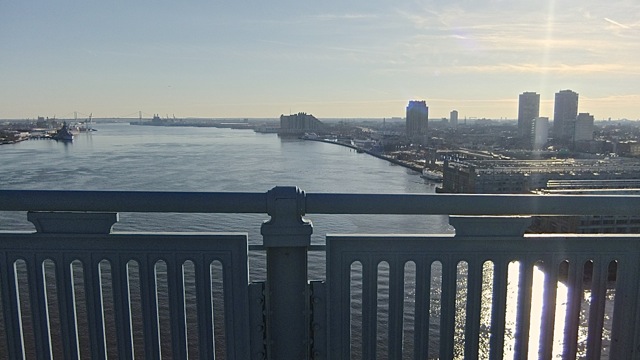
It feels strange to get on a ship so far from a coastline. Here is the Delaware River that will provide the waterway to take us to the North Atlantic. – Es fühlt sich komische an, im Landesinnern win grosses Schiff zu besteigen. Wir werden auf dem Delaware River bis zur Küste des Atlantischen Ozeans fahren.
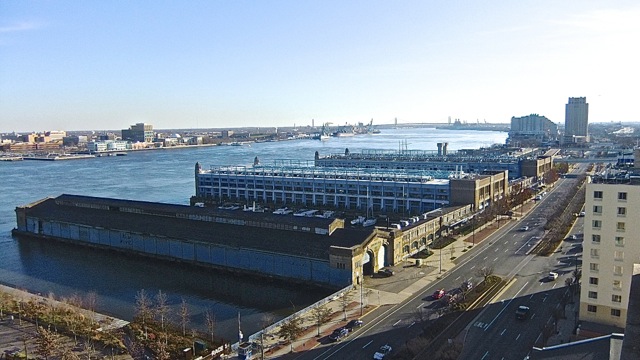
The old municipal pier in Philadelphia.Delaware River from the Benjamin Franklin bridge between Philadelphia, PA and Camden, NJ.
Invite somebody to read - Lade jemand zum lesen ein:
Yesterday, I had the good luck of making another journey, within the city of Philadelphia. Through a friend of a friend, I received an invitation for dinner with strangers. But there was nothing strange about meeting the people I have never met before.
Except that I took a bus to get to the railway station, which is not so strange, but the bus followed the trolley lines. And except that the railway station was full of books, and the railway was long ago replaced by a suburban trolley. Had I spent browsing through the 50,000 books at the railway station, I could have found one that would explain the transportation history of Philadelphia and how the traffic patterns have changed over time.
After all, I was close to where the former summer White House was. Before the capitol was built in Washington, the government governed from Philadelphia, but when it was too hot and the mosquitos were too fierce, the government went up the hill to Germantown to conduct its business. And not far from the centre of power, a few German immigrants and Quakers were so upset about witnessing the everyday business of slavery, that they wrote a letter of protest to the government.
I consider myself blessed for the friendship and hospitality I received. It also gave me opportunity to experience some places of United States history along the way. And if you ever desire a used book on history or any other subject, feel free to check out the online section of the bookstore at the railway station.
Invite somebody to read - Lade jemand zum lesen ein:
When I think about the extent of misery I described in “Mapping it out”, there are many questions that come up for me:
When is this misery, this crisis going to end? This statement implies where we generally see the problem: The misery of “poverty amidst prosperity” seems to be the apparent problem that needs to be addressed. Why else would we find evidence of hundreds of charities and social services initiatives, both from the public and the private sector in Kensington?
Poverty is not the problem – Affluence is!
The early church fathers (5th century) have formulated it this way: “Some people are indigent for the very reason that others hold a superfluity. Take away the rich man and you will find no pauper. No one should own more than is necessary but everyone should have what they need. A few rich people are the reason why there are so many poor” (Pelagius, as cited by Wallis, p.116)
There is nothing wrong with wealth in its original meaning of the word: Being well. But affluence has nothing to do with well-being.
Affluence in the United States refers to an individual’s or household’s state of being in an economically favorable position in contrast to a given reference group.” (Wikipedia)
Jim Wallis describes how that dynamic of maneuvering into a favourable position for individuals, households, or corporations has led to a rat race that is ultimately destructive for the world. We seem to have lost some old fashioned values, like the concern for the common good. It is a sense of individual entitlement (“it’s all about me!”), and the instant gratification of wants (“and I want it now!”) that has taken over.
And we are not satisfied if we have all we need: The consumerist discourse suggests that we need to compete and get ahead of everybody else. Keeping up with the Joneses is one of the symptoms of affluenza, a non-medical disease that has become widespread in affluent societies:
Af-flu-en-za n. 1. The bloated, sluggish and unfulfilled feeling that results from efforts to keep up with the Joneses. 2. An epidemic of stress, overwork, waste and indebtedness caused by dogged pursuit of the American Dream. 3. An unsustainable addiction to economic growth.”(http://www.pbs.org/kcts/affluenza/)
Wallis describes how the market has become like a god. It is all-powerful, all-knowing, and all-present. We have subjected ourselves to the power of the market forces to the point where we start realizing and suffering from the symptoms of affluenza: This unfulfilled feeling.
However, the market does not give you the comfort of the divine. It is not all-loving. If we feel unfulfilled, the market will produce yet another consumable for us and will give us the promise that everything will be taken care of. It sounds like providence
Kensington is a prime example of the hollowness of that market providence. It is not meant to be shared among all human beings. It is not meant to be shared for the sustained well-being of all of creation. Most of us are aware that natural resources are limited. We have made everything on this planet and beyond a commodity that can be exploited for short term gain. Few decisions are driven by the concern of the seventh generation from now.
A perpetual and unregulated growth society needs millions of impoverished and middle-class people that sacrifice themselves and contribute to the extreme accumulation of wealth by a few. Wallis gives stunning examples of the growing gap between the rich and the rest in America and the world. The 400 wealthiest people in the United States control more assets than the 160,000,000 people at the bottom end of the wealth spectrum together!
And the gap is widening every year. That is why I am convinced that poverty is not the problem. Once we rediscover that we are happier with less, and that we are all in this together, we will be heading towards a state of providence. If we redesign our economy and polity, as an expression of the divine will, there will be enough to meet the needs of every human being.
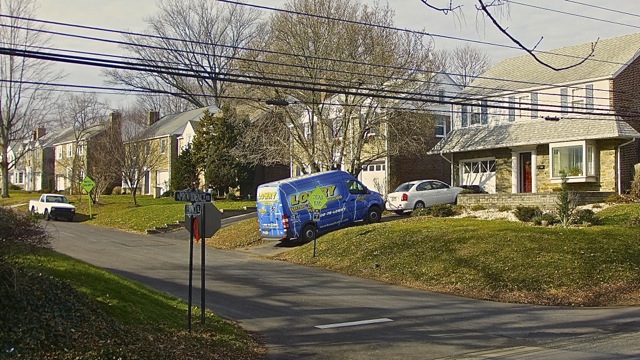
Street scene along Providence Road in Media, PA
In the meantime, the self-proclaimed “road to providence by perpetual and unlimited growth and consumption” is indeed a DEAD END. It has led to the financial collapse of recent years, and it will lead to further crises and catastrophes down the road.
Unless we decide to plan for de-growth and create a culture of sharing, we will have to ask ourselves again and again: when will this misery going to end? Wallis suggests that we better start with the question: “How is this crisis going to change me?”
The eerie beauty of the flashing lights from emergency response vehicles.
I have not met my neighbours, yet. But I have a variety of impressions from living side by side, separated by a wall that is not sound proof.
So far, I have heard only adult voices. There is no other indication that children are living right next door. People come and go. At times, the light is on in the dining room, whose windows are facing the windows of our dining room, six feet apart. Behind the curtains, outlines of human figures are visible. And these figures talk, discuss, and laugh. I consider the interactions animated, loud, passionate, Mediterranean.
In the flow of these voices, I can hear the door open and close, the conversations being carried out onto the street and slowly disappearing. Then it is silent, the light sometimes on, sometimes off.
Norwegian icebreaker at work on a river in Northern Canada – Norwegischer Eisbrecher im Einsatz auf einem Fluss im Norden Kanada’s (photo credit: joe-ks.com)
But the gate is narrow and the way is difficult that leads to life, and there are few who find it. – Denn die Pforte ist eng und der Weg ist schmal, der zum Leben führt; und wenige sind es, die ihn finden. (Mt. 7:14)
As silly as the scene in the picture looks, it represents several important lessons for me:
A problem always has a solution.
Direct action can be more effective than waiting for outside/government help.
Self-help is more sustainable than professional solutions.
Employ the simplest means to get a job done.
Make the best with what you have.
Live your life adventurously!
What does this picture represent for you?
So blöd wie die Szene im Bild erscheinen mag, ich ziehe mehrere Lehren daraus:
Für jedes Problem gibt es eine Lösung.
Direkter Einsatz kann viel effektiver sein als auf Hilfe von aussen/der Regierung zu warten.
Selbsthilfe ist dauerhafter als eine professionelle Lösung.
Wende die einfachsten Hilfsmittel an um eine Arbeit auszuführen.
Mach das Beste mit dem was du hast.
Lebe dein Leben abenteuerlich!
Was sagt dir denn dieses Bild?
A good person out of the good treasury of the heart will bring forth that which is good; – Der gute Mensch bringt aus dem guten Schatz seines Herzens das Gute hervor. (Lk. 6:45)
Invite somebody to read - Lade jemand zum lesen ein:
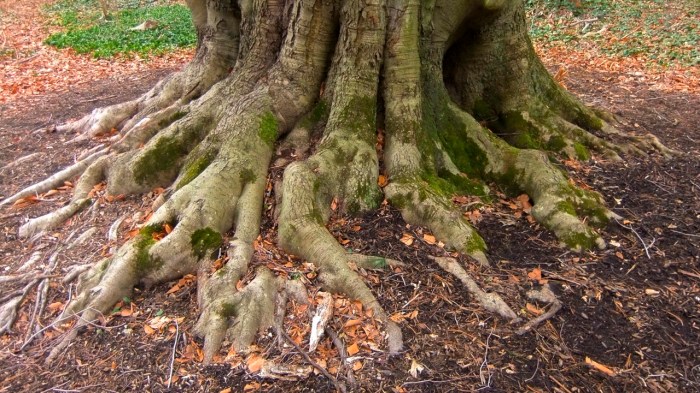
A stunning set of roots: Tree at Pendle Hill, Quaker Education Centre in Wallingford, PA.
Creating and committing to this blog site was one of the intentions for this year. So far, I can say that the journey has been a positive challenge and that I enjoy the process.
The picture itself is an expression of what I set out to do with my blog: An exploration of roots and what is growing from them.
I consider my life to be rooted. Using another word for roots derived from Latin, I can say I consider my life to be radical.
In an early blog entry, I explored that connection between roots and radicalism. Read it here: Ofradix the name.
I would like to continue throughout the year to put my faith into action – and the OFRADIX blog is one of the tools for me to do so. It is my hope to use the strength of my roots to sprout a tree and to be a living testimony for what I believe in.
I purchased oil and vinegar in one of the supermarket-like grocery stores in Kensington that clearly markets to the Caribbean immigrant community. I was standing out like a streetlight, not only by appearance, but also by language.
It was a busy store, or maybe just a busy time of the day. Couples and multi-generational teams were filling up grocery carts with exotic fruit and vegetables, with dry goods, cans, and fresh meat.
When I got to the lines at the check-out, the other customers took pity on me: They asked me first, and then they insisted, that I go right to the front of the line with my two small items for purchase.
I had all the time in the world to wait my turn like everybody else since I was simply out exploring the neighbourhood; but it was of little avail to explain that to the crowd that was discussing the case in multiple languages and came to the consensus that I should go first.
I expressed my gratitude for the gesture. It made me feel special, it made me feel welcome, and it gave me a sense of genuine community spirit.
Viva el Caribe!
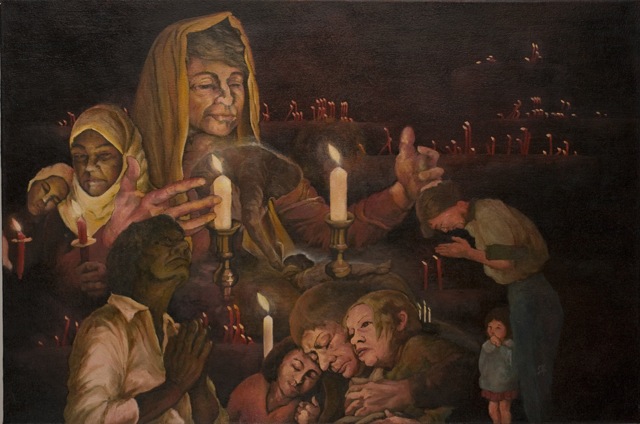
Sharing the Root – Painting by Tenyoh (photo credit: Yoko Sugawara)
The row houses in the Kensington area were originally built for workers in the vicinity of the factories that employed them. They are a monument to industriousness and dignity. The factories were not social institutions, but apparently it was possible for many families to live in their own little house in the neighbourhood. It was a short commute to the workplace. There were many little corner stores selling things of daily needs, and bars for those who had daily or occasional wants. Some avenues were commercial districts with a variety of stores and shops. I have seen a library in a park, schools and a hospital – all in a similar architectural style making use of brickwork, just the way the factories were built. And there were many churches to comfort the ones hit by hardship and to celebrate with the ones who were able to make it.
Industrial Beauty – a restored factory portal in Kensington
It is the custom of the Simple Way community to start the day with a common prayer at eight. After arriving in Philadelphia very tired, I realized that I am travelling very lightly (on purpose) and thus have neither a watch nor an alarm clock with me. How am I going to meet the community on time with my internal clock influenced by time zone changes and the tiredness from traveling on a train overnight?
I eventually figured out the technical part. I can use my Swiss cell phone as a timekeeper and alarm clock. But what I experienced was so much nicer: Fifteen minutes before the set time, a sparrow landed on the air conditioning unit that is installed in the window right next to my bed. The little bird started to happily chirp away for a few minutes. This unspectacular bird song was waking me up gently.
What a contrast to the repeat sirens from emergency vehicles, mixed in with the low rumble of the elevated subway system, and the cacophony of neighbourhood sounds and voices that is an almost constant companion in the background.
I am grateful for the little bird. It came back again this morning, right on time, to remind me of the beginning of another beautiful day in an unfamiliar city. Let the prayers begin.
The Kensington neighbourhood might be one of the rougher places in Philadelphia – the City of Brotherly Love.
There must be a way…
Allegheny Station of the subway system is not particularly accessible. The trains are running elevated at the level of the third and fourth story of the adjacent houses. The station exit is not fitted with an elevator – just long concrete stairs down to street level, moist and slippery from the melting snow mixed with the grime of an administrative district with low-priority for proper maintenance. Continue reading “Daily Random Act of Kindness #3”→
Invite somebody to read - Lade jemand zum lesen ein:
On a fully booked train, the fight for the best seats was on. Amtrak took no chances and its personnel herded customers like cattle to their wagons. No opportunity for independent responsible judgment.
Well, at least some sign of habitation near the big house of the nation…
… but its resident chose to seek the warmth of the sun, establishing himself like a part of a monument for humanity.
I had enough time between trains to go for coffee. So I walked up to the Capitol to see if the president, or another representative would have time to have coffee with me. But, nobody home… So I enjoyed a walk around those massive buildings in a warming winter sun.
I really enjoyed the train ride from Chicago to Washington. I immediately remembered why I prefer this mode of transportation over the more expedient one in the airplane. I can really enjoy the land, the distance, the changing scenery. I guess, the transcontinental train ride is still on the bucket list!
Invite somebody to read - Lade jemand zum lesen ein:








 OFRADIX