Enjoying the wealth – Das Geniessen von Wohlstand

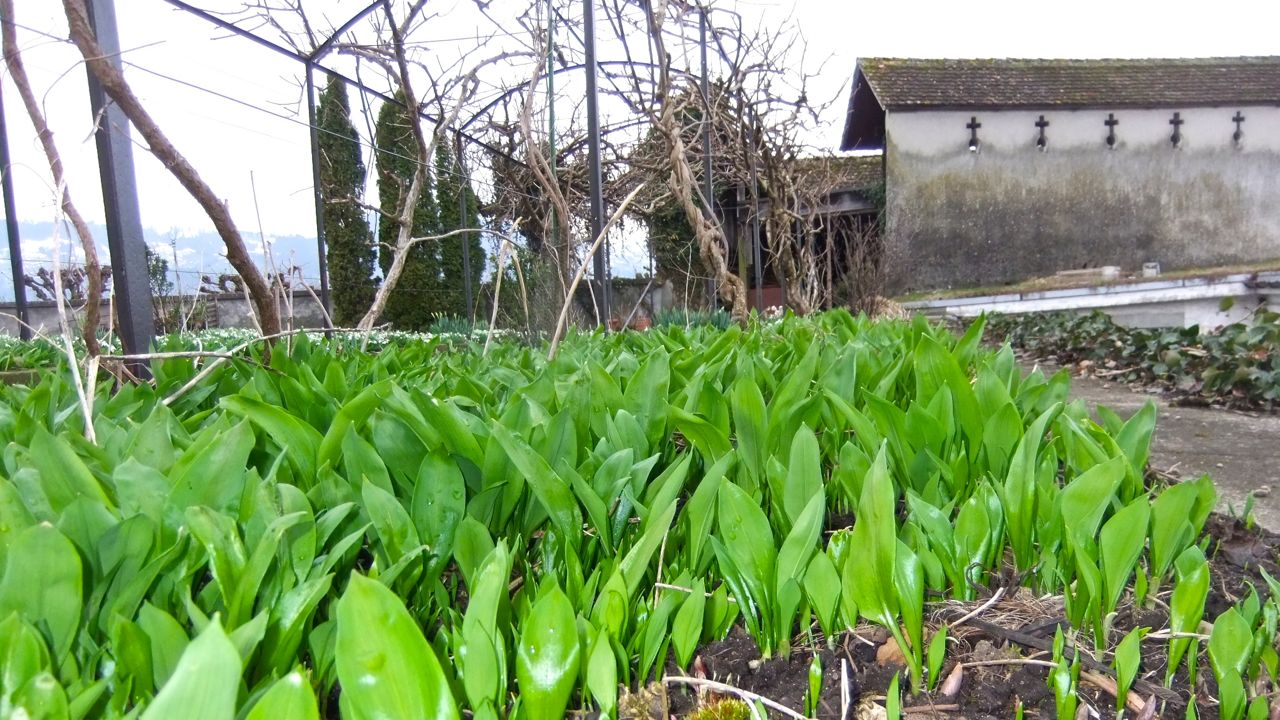
Allium ursinum (Bärlauch; Wild Garlic) in the monastery garden at Rapperswil. This unassuming green is a welcomed addition to the early spring diet, providing a source of enjoyment and well-being for those who set out to harvest it.

Die deutsche Übersetzung folgt weiter unten.

Let us celebrate the beginning of spring, the season of fresh greens and hope. The thoughts on wealth were inspired by a comment on the story of the ascetic in the palace.

Celia shared her thoughts to the story: “People with wealth often feel guilty about being wealthy because there are so many in this world who live in poverty. Therefore, they cannot enjoy the wealth that they have because of those who have not. But what Love says is this: Enjoy it but do not be attached to it. We are invited to indulge in the luxuries that life has to offer but we need to remember that it does not really belong to us and therefore, we must be prepared to walk away from it, give it away and/or let it go at any time.”

There is much truth in her observations. The ascetic in the story never made any judgement on the wealth of the powerful. Nonetheless, I am very reluctant to endorse the enjoyment of wealth in such universal terms. Continue reading “Enjoying the wealth – Das Geniessen von Wohlstand”

Ausgrenzung, Unterdrückung, und Widerstand (+en)

(English translation below)

Bei der Ankunft im ehemaligen Kapuziner Kloster, dem heutigen Haus der Gastfreundschaft, ist eine grosse, steinerne Gedenktafel sichtbar. Obwohl die Tafel in erster Line auf die Baugeschichte des historischen Gebäudes verweist, lässt sich aus dem ersten Satz viel Vorgeschichte heraus lesen:

Sunnehuegel7

„Zur Beruhigung der bitteren Untertanen schickte nach dem Bauernkrieg von 1653 der Rat von Luzern die Kapuziner nach Schüpfheim und erbaute ihnen auf eigene Kosten hier, wo bisher ein Galgen mit Überresten hingerichteter Bauernführer stand, Kirche und Kloster. 

Der Bauernkrieg war ein Aufstand der rechtlosen Landbevölkerung. Die Bauern hatten genug von der politischen Bevormundung und der wirtschaftlichen Ausbeutung und Benachteiligung durch die mächtigen Stadtherren. Continue reading “Ausgrenzung, Unterdrückung, und Widerstand (+en)”

Verdichten (+en)

Bergahorn, allein auf weiter Flur [in der Nähe des Kraftortes Heiligkreuz] - A solitary Great (or Sycamore) Maple tree [near Heiligkreuz, a place of strength].
Bergahorn, allein auf weiter Flur [in der Nähe des Kraftortes Heiligkreuz] – A solitary Great (or Sycamore) Maple tree [near Heiligkreuz, a place of strength in Switzerland].

Heute möchte ich ein Gebet mit dir teilen, das in poetischer Weise beschreibt woher einige meiner Gedanken stammen die die Grundlage sind für viele meiner Blogeinträge. Es gibt mir Kraft, diesen Weg weiter zu gehen.

Gott,
lege Worte mir in den Mund,
die über das hinaus reichen, was erreichbar ist.
Die über das hinaus denken,
was denkbar ist.
Die sich mehr wünschen
und mehr vorstellen,
als ich mir wünschen und vorstellen kann. Continue reading “Verdichten (+en)”

En route – Philadelphia

A Better Yukon for All – the governmental strategy for social inclusion and poverty reduction

A critical review by Othmar F. Arnold

(All mentioned documents are linked directly to the original source.)

The preamble to the new strategy document outlines very nicely what a better Yukon for all means: “A socially inclusive society is one where all people feel valued, their differences are respected, and their basic needs are met so they can live with dignity. It is a society where everyone has the opportunity to participate and to have their voice heard.’ (p. 8) And it continues with deep insight about social exclusion: it “is the result of barriers in the social, economic, political and cultural systems” (p. 8).

In the introduction, the scope of the strategy is presented as a guideline to social policy development; or in other words, how government will facilitate a way of meaningfully living together. From the research the government conducted, it concluded that service delivery and access to services appear the main reasons for the fact that some people in the Yukon do not feel included. Furthermore, “poverty is one of the most obvious factors contributing to social exclusion, but social exclusion also stems from and is exacerbated by inadequate education, housing, health, social participation, employment and access to services (p. 8)”.

Continue reading “A Better Yukon for All – the governmental strategy for social inclusion and poverty reduction”

A Better Yukon for All – a new strategy paper

The Government of Yukon has recently released its long-awaited

Social Inclusion and Poverty Reduction Strategy

It has been in the works for a while and there were several delays in releasing the document. But I am glad that it has finally seen the light. The entire strategy document can be downloaded from the following page: A Better Yukon. On the same page, the government released the 2010 background research report: Dimensions of Social Inclusion and Exclusion.

A socially inclusive society is one where all people feel valued, differences are respected and basic needs are met so they can live with dignity. Barriers in social, economic, political and cultural systems can prevent people from being part of their community. Everyone is affected by social exclusion and poverty, and everyone plays a role in finding solutions.

Vision

A Yukon where social exclusion and poverty are eliminated, diversity is celebrated, and all Yukoners have the opportunity to prosper and participate to their full potential, free from prejudice and discrimination.

The strategy document provides guiding principles, goals, and a commitment to measure success.

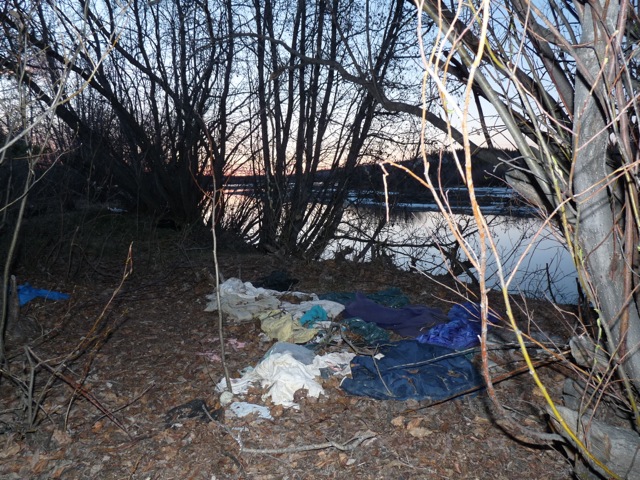
Evidence of Homelessness in Whitehorse: abandoned camp along the Yukon River

Continue reading “A Better Yukon for All – a new strategy paper”

The time for giving – global needs you would have never dreamed of

Over the last few days, I came across several writings in the blogosphere about aid. It started with the blog from a Norwegian family that inquired whether providing employment for a person from a marginalized context (read: Third World country) could potentially constitute a form of development aid at the private, most direct level.

Is hosting an au pair the most direct form of developmental aid maybe?
I´m not being cynical. It is a sincere question. (from Au pair host: “Development Aid?“)

In response, I offered some of my own thoughts for finding an answer:

…However, I have some doubts about the notion of development aid. In the first case, the mother and child have migrated from the less affluent to the more affluent context due to marriage. They have uprooted themselves to significantly improve their social and hopefully economic standing – this is what I call upward mobility. There is no development in Kenya associated with that.
In the second case, the young woman has returned with hard earned and saved cash and is able to run a family business. At least that will have a development effect in the country of origin. But the process is a form of migrant labour, or maybe another form of remittance.
I think that if a person from a marginalized country comes and works as au pair in a highly privileged country and is treated like a human being and not simply as cheap labour, it is a noble exchange.
But it does not constitute charity:

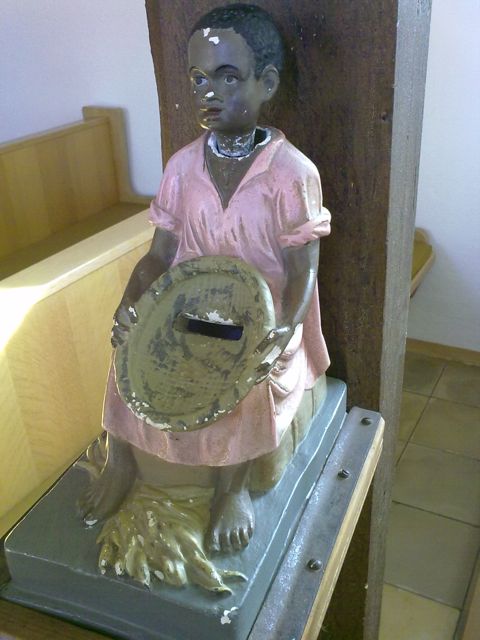
Nick Negerli - the ubiquitous guilt-absorbing church collection boxes of a recent past (photo credit: vgntramp.wordpress.com)
(photo credit: vgntramp.wordpress.com)

Continue reading “The time for giving – global needs you would have never dreamed of”

Becoming a Quaker in a fragmented world (+de)

The Friends Meeting House in Victoria, BC. The Quaker community is celebrating the 100th anniversary of their meeting house in 2013. (photo credit: Vancouver Island MM)

Für eine deutsche Übersetzung, klicke hier: Quäker werden in einer fragmentierten Welt

Now it is official, I have been accepted into membership of the Religious Society of Friends. I would like to share a quote from the report of the clearness committee that helped me discern whether becoming a Quaker is the right step for me and the Victoria Friends Meeting at this time:

…His readings, experience and deep reflections about his spiritual journey and its congruence with his life of service led him to apply for membership after some email exchanges and conversations with VFM members.

Our clearness committee enjoyed a lively visit with Othmar.  He exhibits a remarkable mix of delightful enthusiasm and direct, serious, and practical commitment to humane principals.  He also has deeply realistic expectations about his service without cynicism or romanticism.  We appreciated his good natured story-telling which was appropriately serious without solemnity.  We feel that he is committed to spiritual openings compatible with our understanding of Quaker faith and practice.  He seeks to deepen his spiritual life with support from Quakers and in particular our Victoria Meeting…

…We recommend his acceptance into membership with joy and the conviction that our conjoined spiritual lives of worship and service will benefit.

This is a big step for me. Continue reading “Becoming a Quaker in a fragmented world (+de)”

A call for lateral love from down under

Today I learned through a follower of this blog about an important indigenous healing initiative in Australia. It is called Lateral Love Australia and is intended to explore and help overcome the opposite of lateral love: Lateral violence.

Lateral violence happens when people who are both victims of a situation of dominance, in fact turn on each other rather than confront the system that oppresses them both.

I was touched by this initiative. I have witnessed many instances where people in marginalized communities I served in were hurting each other. Instead of pulling together towards healing from various forms of colonial trauma, people engage in acts of lateral violence (gossip, bullying, blaming, alcoholism, drug use, domestic violence, suicide). This only creates more hurt and pain, helps reinforce stereotypes, and perpetuates racism.

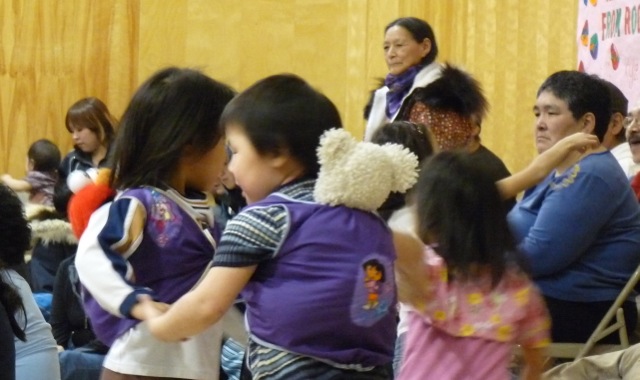
Inuit children in Ikaluktutiak/Cambridge Bay practicing lateral love. Family dance Christmas 2008.

Continue reading “A call for lateral love from down under”

Feast Day: Othmar

für eine deutsche Version: Namenstag: Othmar

Today I am going to tell you a story of a gifted little boy born on the shores of Lake Constance. He grew up in a place where he would speak an Alamannic German at home and Latin in more formal settings. He was born into a privileged family: He got the chance to go to school at an early age. The intent was to groom him for service in the royal administration. For his postsecondary education he is being sent abroad where people speak Romansch. There he lives in a palace with the family of a powerful mentor. After he mastered the sciences, he continued to study theology and became a priest.

The young man wanted to return to the shores of Lake Constance, but his mentor had a strategic placement for him in mind. He served for a number of years as parish priest and gained a reputation for compassionate service and his special attention for the marginalized. Eventually, he got called by an even more powerful landlord to establish a monastery in the woods of the Steinach valley. The local ruler secured a royal order to do so, and thus to establish a cultural and religious defence post on the margins of competing jurisdictions.

Abbot Otmar (photo source: http://www.santiebeati.it)

Continue reading “Feast Day: Othmar”