Arise, all women who have hearts whether your baptism be that of water or of tears! Say firmly: We will not have great questions decided by irrelevant agencies. (J.W. Howe, 1870)
Another Mother’s Day in the name of peace (photo credit: AP Photo/Sunday Alamba)
Forget the flowers, the chocolates, the overpriced cards with a printed, standard nicety on it. Mothers’ concerns and contributions are of highest political and social importance.
The following appeal is one of the roots of Mother’s Day as a celebrated holiday: No romantic notion and definitely no commercialization in the name of greedy profit! The urgency to recognize mothers as peace keepers of the world and to give them a voice as such has not diminished since then.
Various Friends observed during a recently held retreat on theSpirituality of John Woolman how amazing it was that the main concerns raised by Woolman some 250 years ago were still current today. On the surface it seems unlikely: we no longer have to deal with slave trading, stage coaches, or buttons as unnecessary things on clothes. However, the way we relate to and treat people, mainly the ones that are not the way we are, and the matters of business and commerce are still very much on the agenda today.
As a child of the sixties I am used to see problems and injustices, to denounce them, and to call for solutions. Together with my generation I was shocked by the witnessed use of violence in Biafra, the recognition of the limits of energy resources, and the advancing pollution of our environment. The grievances affected us and we eagerly sought solutions to turn away the disasters, which seemed to threaten our privileged lifestyles. We collected for charities, travelled by train from one meeting to another, and bought many of our consumer products grown organically or trade through alternative market channels.
Während einer kürzlich abgehaltenen Retraite zum Thema Spiritualität von John Woolman bezeugten verschiedene Freunde, dass es erstaunlich sei wie aktuell die Grundanliegen, die Woolman vor 250 Jahren vorbrachte, heute noch sind. Oberflächlich betrachtet scheint das unwahrscheinlich, denn wir müssen uns nicht mehr mit Slavenverkauf, Postkutschen, oder Knöpfen als Überflüssigkeiten an Kleidern auseinander setzen. Doch die Thematiken des Umgangs mit den Menschen, vor allem denen die nicht sind wie wir, und des Umgangs mit unseren Angelegenheiten und Geschäften sind nach wie vor höchst aktuell.
Als ein Kind der Sechziger Jahre bin ich mir gewohnt, Probleme und Ungerechtigkeiten zu sehen, an zu prangern und nach Lösungen zu rufen. Ich war mit meiner Generation schockiert über die Zeugnisse von Gewaltanwendung aus Biafra, die Verknappung der Energiereserven, die fortschreitende Verschmutzung der Umwelt. Die Missstände machten uns betroffen und wir suchten eifrig nach Lösungen um die Katastrophen ab zu wenden, die unsere privilegierten Lebensweisen zu bedrohen schienen. Wir sammelten für Hilfswerke, reisten mit dem Zug von einer Versammlung zur andern, und erstanden viele unserer Konsumgüter aus biologischen Anbau oder alternativen Marktkanälen.
Healthism is a holistic ideology, which focuses on an individual’s responsibility for his/her health based on informed choice (MacDonald, 1998). Health promotion is deeply embedded in this ideology. Healthism is the culmination of individualistic and consumerist thought, making one’s own body as the sole focus of values and decisions. Health, as a narrowly defined medical standard, and beauty, as expressed in outward physical appearance, become the most important indicators of personal well-being. In combination with these individualistic thinking patterns, the physical environment is being seen as a constant threat to human health and well-being. Society and cultural expression become almost irrelevant in the context of health.
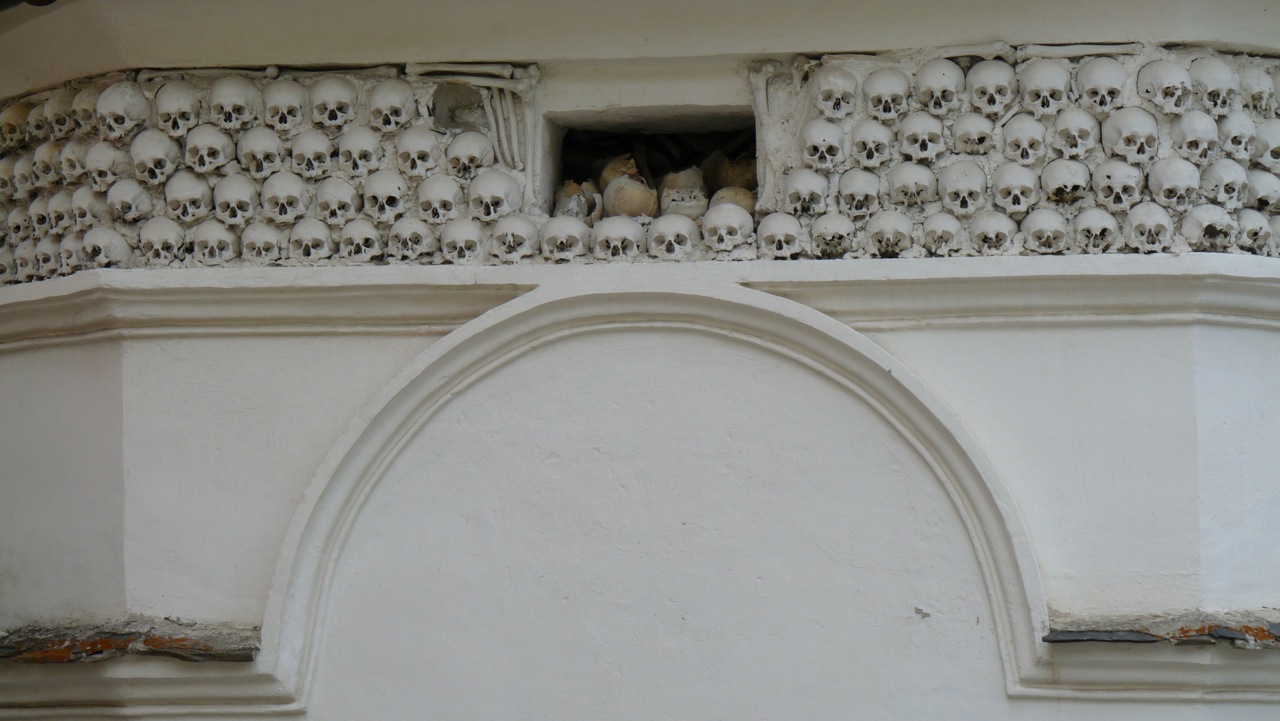
Pfarrkirche in Vrin, GR, Switzerland: Gedenkstätte für die Pestopfer – Memorial for the victims of the Black Death.
„Healthism“ (aus dem Englischen und ungefähr mir Gesundheitswahn übersetzbar) ist eine ganzheitliche Ideologie die darauf aufgebaut ist das jedeR Einzelne, auf der Grundlage von bewussten Entscheidungen, verantwortlich ist für ihre/seine Gesundheit und Wohlergehen. Gesundheitsvorsorge ist mitunter ein wichtiger Teil dieser Ideologie. Healthismus ist eine Kulmination von individualistischen und konsumorientierten Gedankenwelten, die den eigenen Körper ins Zentrum stellt für alle Wertüberlegungen und Entscheidungen. Gesundheit – in der Form eines eng definierten medizinischen Standards – und Schönheit – ausgedrückt in der äusserlichen körperlichen Erscheinung – werden somit die wichtigsten Indikatoren für das persönliche Wohlbefinden. Dazu kommt noch, dass in dieser Denkweise die natürliche Umwelt als konstante Bedrohung für die menschliche Gesundheit und das Wohlergehen angesehen werden. Gesellschaft und Kultur werden beinahe bedeutungslos in dieser Vorstellung von Gesundheit.
Pfarrkirche in Vrin, GR, Switzerland: Gedenkstätte für die Pestopfer – Memorial for the victims of the Black Death.
Healthismus ist eine Ausdruck von extremen Privilegien. Die Ideologie macht uns vor dass wir die Schöpfer unseres Schicksals und unserer Bestimmung sein können. Continue reading “Gesundheitswahn”→
Invite somebody to read - Lade jemand zum lesen ein:
Affluenza: “Konsumismus, auch Konsumerismus oder Konsumentismus (von lat. consumere – verbrauchen), ist ein übersteigertes Konsumverhalten zum Zweck der gesellschaftlichen Distinktion oder des Strebens nach Identität, Lebenssinn und Glück.” (Wikipedia)
Eine satirische Abhandlung über einen potentiellen Ausbruch einer ansteckenden Krankheit in den USA hat mich gerade wieder in der Vorweihnachtszeit stark berührt. Affluenza, ein Begriff der im Englischen tönt wie Influenza (Grippe), ist ein Konstrukt das schon vor einigen Jahren geprägt wurde um aus gesellschaftskritischer Sicht auf unser für normal gehaltenes Konsum- und Sozialverhalten aufmerksam machen.
Hier gibt es eine tolle filmische Umsetzung der Problematik: Kinder und Jugendliche die in einer Überfluss- und Wegwerfgesellschaft aufwachsen haben oft keine Vorstellung, dass nur die wenigsten, auch in unseren Kulturkreisen, derart privilegiert sind. Das Video ist in Australien gemacht; hier eine Version mit deutschen Untertiteln.
Ich bin was ich bin, weiss was ich bin, und muss mich nicht anpassen nur weil du grösser, stärker, rentabler, und dominierender bist. Ein Haus an der Obergrundstrasse in Luzern das schon seit meiner Kindheit immer quer steht. – I am what I am, I know who I am, and I don´t have to assimilate just because you are bigger, stronger, more profitable, and more dominant. This house in Lucerne has, as far back as I can remember, been misaligned in the eyes of modern city planners.
Sich quer stellen:
der bewusste Entscheid sich nicht treiben zu lassen von Modeströmungen.
der bewusste Entscheid sich nicht treiben zu lassen von Ängsten.
der bewusste Entscheid, Einzigartigkeit und konsumorientierter Individualismus miteinander zu verwechseln.
der bewusste Entscheid nicht auf Kosten anderer zu leben.
der bewusste Entscheid sich nach Werten und Prinzipien zu orientieren, die man mit dem eigenem Gewissen vereinbaren kann.
der bewusste Entscheid sich nach Werten und Prinzipien zu orientieren, die man nach reiflicher Prüfung als göttlicher Wille erkannt hat.
Bewusst leben. Einzigartig sein.
(English version below)
“Demut heißt sich nicht vergleichen. In seiner Wirklichkeit ruhend ist das Ich weder besser noch schlechter, weder größer noch kleiner als anderes oder andere. Es ist – nichts, aber gleichzeitig eins mit allem.” (Dag Hammarskjöld, aus dem Buch: Zeichen am Weg)
Affluenza: 1. A painful, contagious, socially transmitted condition of overload, debt, anxiety and waste resulting from the dogged pursuit of more. 2. The bloated, sluggish and unfulfilled feeling that results from efforts to keep up with the Joneses. 3. An epidemic of stress, overwork, waste and indebtedness caused by the pursuit of the American Dream. 4. An unstable addiction to economic growth. (from www.affluenza.org)
and a possible therapy approach:
Degrowth: the intentional redirection of economies away from the perpetual pursuit of growth. For economies beyond the limits of their ecosystems, this includes a planned and controlled contraction to get back in line with planetary boundaries, with the eventual creation of a steady-state economic system that is in balance with Earth’s limits.
from: Serge Latouche, “Growing a Degrowth Movement,” in Worldwatch Institute, State of the World 2010 (New York: W. W. Norton & Company, 2010), p. 181
for more thoughts on the condition of affluenza, click here: Affluenza
Invite somebody to read - Lade jemand zum lesen ein:
For the third time in my life, I have become co-owner of a bank. This seems like a contradiction for a person who embraces voluntary poverty, strives for a simple life, aspires to the ideal of non-possession. Well, I call it a necessity on the way.
The meaning this step has for me is the reason why I feel led to share this unspectacular event in a person’s life with you. I am very critical of the consumerist-capitalist paradigm and dominant economic system. I am deeply suspicious about the integrity of the banking system. These banking institutions embody much of what I see is missing the mark in the global discourse of affluence.
Intriguing pattern of light – Art installation by Niki Saint Phalle in the historic grotto at the Royal Herrenhäuser Gardens in Hannover, Germany
It is a little more than a month that I have been using this blog site as a platform to express my views, share some experiences, and tell a few stories. In the last week, I heard some feedback, that the Canadian Prime Minister’s image would appear along side my blog entries on people’s screens, promoting some form of debt relief.
Now that was hard to take. A Quaker’s writing in which he is trying to uphold the principle of and write from a point of integrity being visually associated with the leader of a government culture and structure that has earned very little credibility in that department.
As we were gathered in silence this Sunday, it was easy to listen to and to hear the raindrops outside.”
The reference to rain shows that I wrote this account of my thoughts back in October when I was worshipping with the Victoria Friends Meeting – here in the Yukon it is currently -35 degrees and no rain in sight!
I was contemplating on the various ways they follow their journey in their natural cycle. Some of them will fall on the earth, the ground that is receptive to soak them up, to store it for the plants, and to release it in the cycle later. Others will run off and pool in a depression, being available for animals to quench their thirst. Yet others will fall on a roof, go down the gutter, onto the concrete, run off the roadways, into the sewer system and the storm drains. Some of them will need to go through a water treatment plant before they are released back into the wild, allowing them to join the natural cycle again.
Monolith Mountain in the Tombstone Territorial Park. A protected natural space in the Tr’ondëk Hwëch’in traditional territory adjacent to the Peel River watershed.
Feedback Peel Watershed Regional Land Use Plan Consultation
My personal opinion is that the Peel River region has sufficient natural value to be designated as a whole (=100%) a protected area similar to a National Park. However, I see that various stakeholders have an interest in accessing some resources in the Peel River watershed:
For First Nations it is an area for subsistence, primarily fishing, but also hunting, berry picking and the collection of other plant materials for medicinal uses. As the representatives of a colonial power, the Yukon Government also has to realize that the Peel River watershed has spiritual values to the indigenous people of that area, the people that have lived on the land for centuries, that live on the land today, and the ones yet-to-come. This land is part of the people – a concept that is hard to grasp for us Westerners who have developed property rights, buy and sell real estate like a commodity, with no emotional or spiritual attachment, and see us as enlightened beings separate from the natural world.
(All mentioned documents are linked directly to the original source.)
The preamble to the new strategy document outlines very nicely what a better Yukon for all means: “A socially inclusive society is one where all people feel valued, their differences are respected, and their basic needs are met so they can live with dignity. It is a society where everyone has the opportunity to participate and to have their voice heard.’ (p. 8) And it continues with deep insight about social exclusion: it “is the result of barriers in the social, economic, political and cultural systems” (p. 8).
In the introduction, the scope of the strategy is presented as a guideline to social policy development; or in other words, how government will facilitate a way of meaningfully living together. From the research the government conducted, it concluded that service delivery and access to services appear the main reasons for the fact that some people in the Yukon do not feel included. Furthermore, “poverty is one of the most obvious factors contributing to social exclusion, but social exclusion also stems from and is exacerbated by inadequate education, housing, health, social participation, employment and access to services (p. 8)”.




 OFRADIX