Here is the promised link to the final instalments of the study sessions by Ben Pink Dandelion, held in August 2013 at the Canadian Yearly Meeting of the Religious Society of Friends:
for the previous sessions, please follow these links:
Healthism is a holistic ideology, which focuses on an individual’s responsibility for his/her health based on informed choice (MacDonald, 1998). Health promotion is deeply embedded in this ideology. Healthism is the culmination of individualistic and consumerist thought, making one’s own body as the sole focus of values and decisions. Health, as a narrowly defined medical standard, and beauty, as expressed in outward physical appearance, become the most important indicators of personal well-being. In combination with these individualistic thinking patterns, the physical environment is being seen as a constant threat to human health and well-being. Society and cultural expression become almost irrelevant in the context of health.
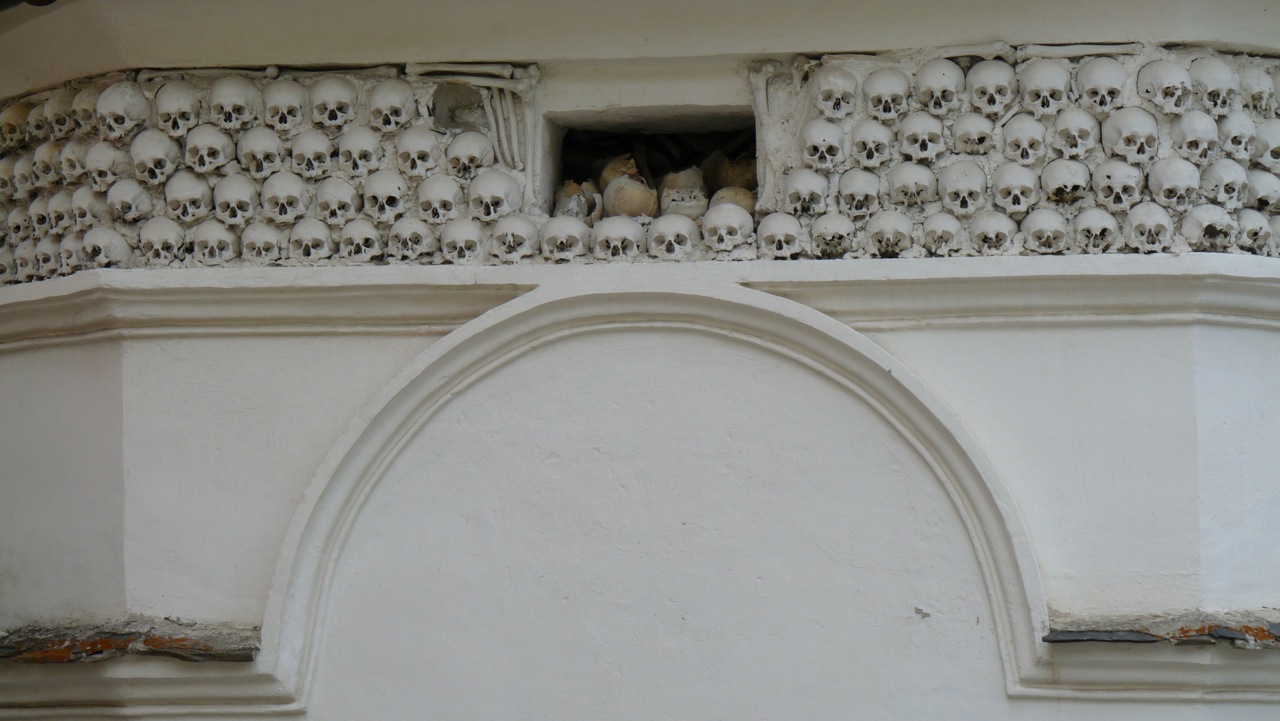
Pfarrkirche in Vrin, GR, Switzerland: Gedenkstätte für die Pestopfer – Memorial for the victims of the Black Death.
„Healthism“ (aus dem Englischen und ungefähr mir Gesundheitswahn übersetzbar) ist eine ganzheitliche Ideologie die darauf aufgebaut ist das jedeR Einzelne, auf der Grundlage von bewussten Entscheidungen, verantwortlich ist für ihre/seine Gesundheit und Wohlergehen. Gesundheitsvorsorge ist mitunter ein wichtiger Teil dieser Ideologie. Healthismus ist eine Kulmination von individualistischen und konsumorientierten Gedankenwelten, die den eigenen Körper ins Zentrum stellt für alle Wertüberlegungen und Entscheidungen. Gesundheit – in der Form eines eng definierten medizinischen Standards – und Schönheit – ausgedrückt in der äusserlichen körperlichen Erscheinung – werden somit die wichtigsten Indikatoren für das persönliche Wohlbefinden. Dazu kommt noch, dass in dieser Denkweise die natürliche Umwelt als konstante Bedrohung für die menschliche Gesundheit und das Wohlergehen angesehen werden. Gesellschaft und Kultur werden beinahe bedeutungslos in dieser Vorstellung von Gesundheit.
Pfarrkirche in Vrin, GR, Switzerland: Gedenkstätte für die Pestopfer – Memorial for the victims of the Black Death.
Healthismus ist eine Ausdruck von extremen Privilegien. Die Ideologie macht uns vor dass wir die Schöpfer unseres Schicksals und unserer Bestimmung sein können. Continue reading “Gesundheitswahn”→
Invite somebody to read - Lade jemand zum lesen ein:
Are you anxious about global warming, the repeat waves of recession, government shut downs, or any other discernible sign of an impending apocalypse?
The end of the world has been a popular topic for centuries, but none of the doomsday scenarios so far have caught my attention. But I feel inspired by the thoughts and queries shared by Ben Pink Dandelion, a quaker scholar from England.
Here is the first part of a series of study sessions on Quaker theology and history illuminating the “end of the world” topic.
The study sessions took place during the Canadian Yearly Meeting of the Religious Society of Friends in Kemptville, ON in August 2013. I will link to the following instalments of this five part series as they are posted publicly.
Obedience is very often understood in relation to the fact that one gives orders and others obey. Obedience is of great importance in hierarchical systems, such as the army, where obedience is imperative and non-obedience leads to punishment. The same is true in the church, where obedience is a special virtue and leads to salvation. Non-obedience is a guide to hell in various church organizations and denominations. But even the seemingly value-free market economy demands absolute obedience. According to proponents of a neo-liberal economic paradigm, influencing the invisible market forces will only lead to misfortune: therefore are government regulations, and other considerations and interventions for the common good responsible for all the ills of today’s consumer society. Continue reading “Obedience – Gehorsam”→
Invite somebody to read - Lade jemand zum lesen ein:
Yesterday, I had the good luck of making another journey, within the city of Philadelphia. Through a friend of a friend, I received an invitation for dinner with strangers. But there was nothing strange about meeting the people I have never met before.
Except that I took a bus to get to the railway station, which is not so strange, but the bus followed the trolley lines. And except that the railway station was full of books, and the railway was long ago replaced by a suburban trolley. Had I spent browsing through the 50,000 books at the railway station, I could have found one that would explain the transportation history of Philadelphia and how the traffic patterns have changed over time.
After all, I was close to where the former summer White House was. Before the capitol was built in Washington, the government governed from Philadelphia, but when it was too hot and the mosquitos were too fierce, the government went up the hill to Germantown to conduct its business. And not far from the centre of power, a few German immigrants and Quakers were so upset about witnessing the everyday business of slavery, that they wrote a letter of protest to the government.
I consider myself blessed for the friendship and hospitality I received. It also gave me opportunity to experience some places of United States history along the way. And if you ever desire a used book on history or any other subject, feel free to check out the online section of the bookstore at the railway station.
Invite somebody to read - Lade jemand zum lesen ein:
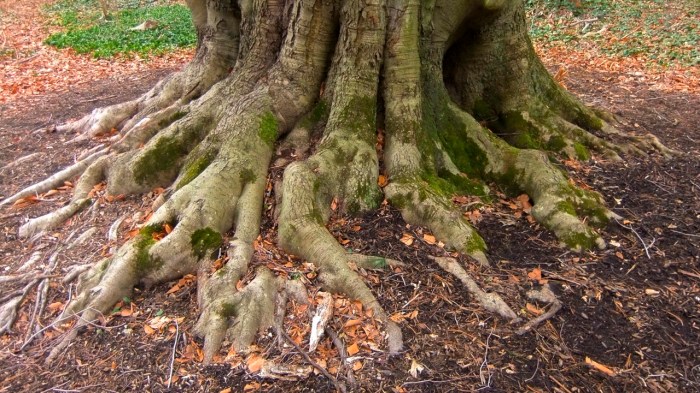
A stunning set of roots: Tree at Pendle Hill, Quaker Education Centre in Wallingford, PA.
Creating and committing to this blog site was one of the intentions for this year. So far, I can say that the journey has been a positive challenge and that I enjoy the process.
The picture itself is an expression of what I set out to do with my blog: An exploration of roots and what is growing from them.
I consider my life to be rooted. Using another word for roots derived from Latin, I can say I consider my life to be radical.
In an early blog entry, I explored that connection between roots and radicalism. Read it here: Ofradix the name.
I would like to continue throughout the year to put my faith into action – and the OFRADIX blog is one of the tools for me to do so. It is my hope to use the strength of my roots to sprout a tree and to be a living testimony for what I believe in.
As we were gathered in silence this Sunday, it was easy to listen to and to hear the raindrops outside.”
The reference to rain shows that I wrote this account of my thoughts back in October when I was worshipping with the Victoria Friends Meeting – here in the Yukon it is currently -35 degrees and no rain in sight!
I was contemplating on the various ways they follow their journey in their natural cycle. Some of them will fall on the earth, the ground that is receptive to soak them up, to store it for the plants, and to release it in the cycle later. Others will run off and pool in a depression, being available for animals to quench their thirst. Yet others will fall on a roof, go down the gutter, onto the concrete, run off the roadways, into the sewer system and the storm drains. Some of them will need to go through a water treatment plant before they are released back into the wild, allowing them to join the natural cycle again.
In the last two months, the Quaker Worship Group in Whitehorse witnessed an increased interest in the Quaker tradition of seeking God and the Quaker form of worship. As a very small and very isolated group, the concern of how to build community has been raised on several occasions.
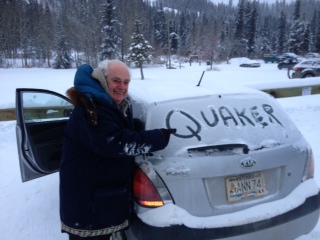
William Swainson – doing Quaker outreach Yukon style at -30 degrees (photo credit: Celia McBride)
Within the last year, we have reframed and updated the entry in the listing of religious services in the local newspaper. We have also updated the listing on the website of the Canadian Yearly Meeting and established a dedicated email address. However, the increased interest seems to have come mostly from the relationship-building done by the individuals from our Worship Group. Continue reading “Letting our Light shine”→
Invite somebody to read - Lade jemand zum lesen ein:
Community mobilization and health education during a malnutrition crisis in Babalmé/Chad
The following article has just been published this week in The Canadian Friend, 108(5) p.13 , a publication of the Canadian Yearly Meeting of the Religious Society of Friends. You can find the current and many back issues online: The Canadian Friend.
Médecins Sans Frontières / Doctors Without Borders in Chad
by Othmar F. Arnold
I have been asked: “How did this service work change me? What impact did the experiences have on my life?”
I must acknowledge that I have not been working as a nurse since that time. I am not the same person as before the mission. A major shift began in my life several years ago. I was called back to my roots, to become radical again, and there were other factors enabling a mid-life reorientation
My children were growing up and becoming more and more independent. Though the high-paying nursing work in Nunavut enabled me to liberate myself from financial obligations accumulated over the years, I was becoming less and less convinced by the direction nursing was going.
The Friends Meeting House in Victoria, BC. The Quaker community is celebrating the 100th anniversary of their meeting house in 2013. (photo credit: Vancouver Island MM)
Now it is official, I have been accepted into membership of the Religious Society of Friends. I would like to share a quote from the report of the clearness committee that helped me discern whether becoming a Quaker is the right step for me and the Victoria Friends Meeting at this time:
…His readings, experience and deep reflections about his spiritual journey and its congruence with his life of service led him to apply for membership after some email exchanges and conversations with VFM members.
Our clearness committee enjoyed a lively visit with Othmar. He exhibits a remarkable mix of delightful enthusiasm and direct, serious, and practical commitment to humane principals. He also has deeply realistic expectations about his service without cynicism or romanticism. We appreciated his good natured story-telling which was appropriately serious without solemnity. We feel that he is committed to spiritual openings compatible with our understanding of Quaker faith and practice. He seeks to deepen his spiritual life with support from Quakers and in particular our Victoria Meeting…
…We recommend his acceptance into membership with joy and the conviction that our conjoined spiritual lives of worship and service will benefit.
It looks like many readers have seen and hopefully enjoyed the initial posting on the “Teach me to stop and listen” song that was shared with the Whitehorse Worship Group by the Quaker Worship Group in Lucknow, Ontario. Next Sunday, our group will practice and sing the song for the first time at the beginning of our monthly meeting for worship.
As I experiment will all kinds of social networking sites (and learn from my children who are much more proficient users), I was able to upload the simple recording of my own arrangement of the song that I wrote about a few days back on this blog. Continue reading “Teach me to stop and listen again”→
Invite somebody to read - Lade jemand zum lesen ein:
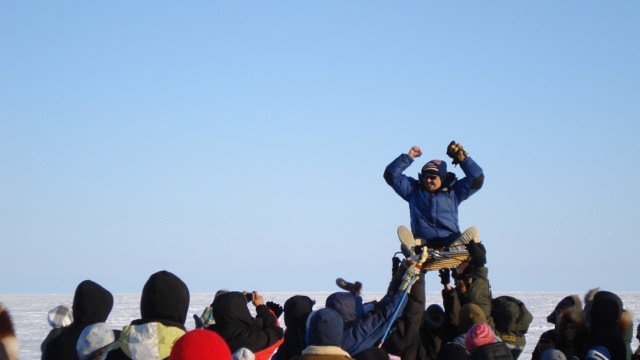
The winner of the 2008 Qavvavik sled dog races in Gjoa Haven, Nunavut, supported by the community in an inhospitable environment.
In a previous post I made the statement that “we are insignificant but essential particles in the universe”. Out the of the entire article, this statement yielded an immediate reaction from the readership. I then recalled that I made a similar entry in my diary last summer during the time I was visiting in Switzerland:
A thought about the rank of self within the higher order of the universe: I am a small, insignificant part of a much larger organism. Despite that smallness, the self is assigned a significance of its own because it is at the same time a manifestation of the whole; also because it bears its own potential within. That potential is a substantial part of the larger organism, without which the whole would not be complete.
(my own translation from German)
I believe this thinking is influenced by the thought of Mahatma Gandhi.






 OFRADIX