Brave words from the top

Instead of pleasantries and platitudes, Francis, bishop of Rome, shared with his executive staff an honest assessment of the situation. I think, the following words are applicable to the wider society of today.

Artwork by Niki  de Saint Phalle at the Grotto at the Royal Herrenhäuser Gardens in Hannover, Germany.
Artwork by Niki de Saint Phalle at the Grotto at the Royal Herrenhäuser Gardens in Hannover, Germany.

The first is “the sickness of considering oneself ‘immortal’, ‘immune’ or ‘indispensable‘, neglecting the necessary and habitual controls. A[n organization] that is not self-critical, that does not stay up-to-date, that does not seek to better itself, is an ailing body. … It is the sickness of the rich fool who thinks he will live for all eternity, and of those who transform themselves into masters and believe themselves superior to others, rather than at their service”.

The second is “’Martha-ism’, or excessive industriousness; the sickness of those who immerse themselves in work, Continue reading “Brave words from the top”

Faith-Matters

unglaubliche Schönheit“Do you believe in God in these days?” –

“I am not so sure. Even less so in the one True One – too exclusive for my taste.” –

“The Father, the Almighty?” –

“No thank you; sounds to me like `friend and helper` – but that brings up memories of legalized force. I don´t need anybody else in my life who tells me what to do .” –

“The Holy Trinity?” –

“Nope, way too academic , too complicated…


Nonetheless, I know from my own experience that a divine power exists – the All-Loving. I can experience that grace again and again in insignificant happenings and every-day encounters mit fellow human beings, with fellow creatures, and the natural environment. But it takes quite a high level of openness and stillness from my side to do so.“

(Own translation. Written by invitation for the magazine “Gott & die Welt”, published by the roman-catholic churches of Mainz, Germany) Continue reading “Faith-Matters”

Glaubens-Fragen

unglaubliche Schönheit“Glaubst du denn an Gott in der heutigen Zeit?” –

“Da bin ich mir nicht sicher. Schon gar nicht an den Einen – zu exklusiv für meinen Geschmack.” –

“Der Vater, der Allmächtige?” –

“Nein danke; tönt für mich nach ‚Freund und Helfer’ – aber das bringt Erinnerungen an legitimierte Gewalt hoch. Ich brauche nicht noch jemanden der mich herum kommandiert im Leben.” –

“Die heilige Dreifaltigkeit?” –

“Nee, viel zu kopflastig, zu kompliziert…


Und doch weiss ich aus eigener Erfahrung, dass es die göttliche Kraft gibt – die Allesliebende. Diese Gnade kann ich immer wieder in kleinsten Begebenheiten und alltäglichen Begegnungen mit Mitmenschen, Mitgeschöpfen, und der Natur erleben. Dazu muss ich jedoch selber offen und stille genug sein.“

(Geschrieben auf Einladung für das Magazin “Gott & die Welt” der Katholischen Kirche in Mainz) Continue reading “Glaubens-Fragen”

Selbstgefälliges Leben und radikale Gedanken

Svartbäcksgården (photo credit: expressivearts.se)

Ungefähr dreissig Freunde aus verschiedenen Gegenden von Schweden, aus Norwegen, Dänemark, Grossbritannien, und der Schweiz, wie auch Vertreter des QCEA und des FWCC, versammelten sich vom 29. Juni bis zum 1. Juli im Ferienheim Svartbäcksgården für die Schwedische Jahresversammlung. Nebst den notwendigen Geschäftssitzungen haben die schwedischen Freunde das Thema: “das Quäker Evangelium: Wie können uns die christlichen Grundsätze Licht und Führung geben für unser inneres Leben, für unsere Gesellschaft, und für unsere Zeugnisse die wir in die Welt hinaus tragen?” Continue reading “Selbstgefälliges Leben und radikale Gedanken”

Complacent lives and radical thoughts

Svartbäcksgården (photo credit: expressivearts.se)

Around 30 Friends from various parts of Sweden, from Norway, Denmark, Great Britain and Switzerland, as well as representatives from QCEA and FWCC gathered at the Svartbäcksgården retreat from May 29th until June 1st 2014 for the Sweden Yearly Meeting. Besides the necessary business, the Swedish Friends chose “the Gospel according to Quakers: How can Christian keystones give light and guidance to our inner lives, our fellowship and our witness in the world?“ as their theme. Continue reading “Complacent lives and radical thoughts”

Lenten Meditation #7

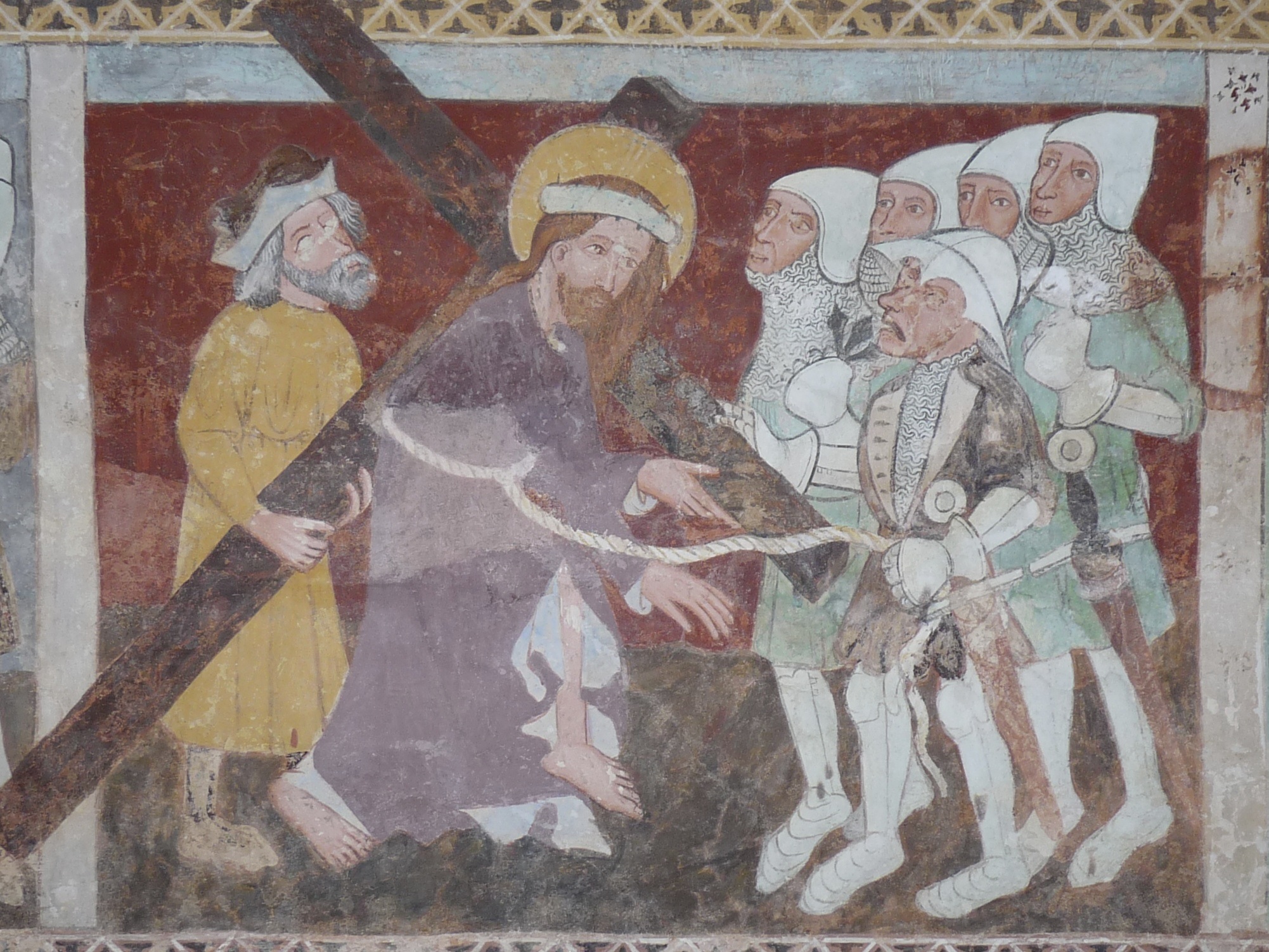
Passionszyklus (Gang nach Golgatha), Kirche Tenna, GR, um 1408, unbekannter Künstler
Passion of Christ fresco (Way to Golgatha), Kirche Tenna, GR, around 1408, unknown artist

A burdened man, apparently at the end of his physical strength, carrying a cross. He is led on a rope by armed and armoured soldiers. In the background a civilian who helps to carry the load. Continue reading “Lenten Meditation #7”

Betrachtung zur Fastenzeit #7

Passionszyklus (Gang nach Golgatha), Kirche Tenna, GR, um 1408, unbekannter Künstler

Ein gebeugter Mann, scheinbar am Ende seiner körperlichen Kräfte, trägt ein Kreuz. Er wird am Strick geführt von bewaffneten und gerüsteten Soldaten. Im Hintergrund ein weiterer Mann, der hilft die Last zu tragen. Continue reading “Betrachtung zur Fastenzeit #7”

Lenten Meditation #6

Passionszyklus (vor Pontius Pilatus), Kirche Tenna, GR, um 1408, unbekannter Künstler
Passion of Christ fresco (Jesus vor Pontius Pilatus), Kirche Tenna, GR, around 1408, unknown artist

An injured and slightly bent man is being presented. The authorities, visibly marked by their distinct headdress and their armoured entourage, look slightly puzzeled. What is the meaning of the finger play of these figures? There are big differences between the three “crowned” characters in this picture. The injured person does not seem completely isolated: The hand on his shoulder indicates a sign of humaneness. Continue reading “Lenten Meditation #6”

Betrachtung zur Fastenzeit #6

Passionszyklus (vor Pontius Pilatus), Kirche Tenna, GR, um 1408, unbekannter Künstler
Passionszyklus (Jesus vor Pontius Pilatus), Kirche Tenna, GR, um 1408, unbekannter Künstler

Ein verletzter und leicht gebeugter Mann wird vorgeführt. Die Autoritäten, erkennbar an ihren Kopfbedeckungen und ihren gepanzerten Begleitschaften, sehen ein bisschen ratlos aus. Was bedeutet das Fingerspiel der Figuren? Es gibt eine grosse Diskrepanz zwischen den drei “Gekrönten” im Bild. Der verletzte Mensch scheint nicht ganz alleine: Die Hand auf seiner Schulter drückt ein bisschen Menschlichkeit aus. Continue reading “Betrachtung zur Fastenzeit #6”

Betrachtung zur Fastenzeit #4

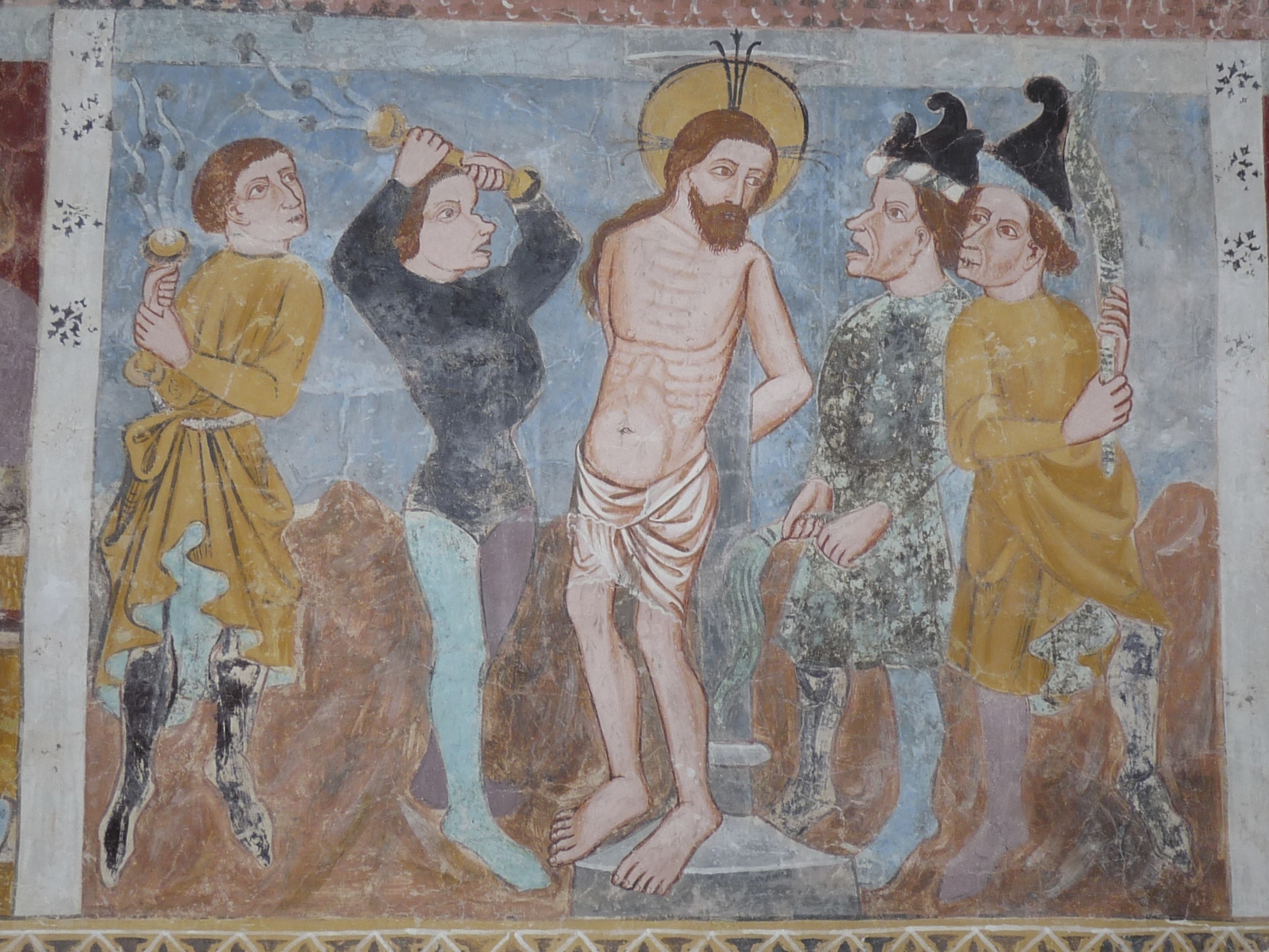
Passionszyklus (Geisselung), Kirche Tenna, GR, um 1408, unbekannter Künstler

Ein beinahe entkleideter Mann, an eine Säule gebunden, umgeben von vier Männern die auf ihn ein zu wirken scheinen. Sie sehen bedrohlich aus oder schauen anteillos zu. Obwohl keine offensichtliche Gewaltanwendung und Blut dargestellt sind, versteht der Betrachter die körperliche und seelische Misshandlung. Der Körper sieht unversehrt aus, auf dem Gesicht kein Ausdruck von Schmerz oder Leiden. Continue reading “Betrachtung zur Fastenzeit #4”

Lenten Meditation #4

Passionszyklus (Geisselung), Kirche Tenna, GR, um 1408, unbekannter Künstler
Passion of Christ fresco (Flagellation), Kirche Tenna, GR, around 1408, unknown artist

An almost naked man, tied to a pillar, surrounded by four men that seem to act against him. They are menacing or look indifferent. Despite the lack of graphic violence and blood, the viewer understands the physical and verbal mistreatment. The body appears unscathed, no expression of pain or suffering on the man’s face. Continue reading “Lenten Meditation #4”

Lenten Meditation #3

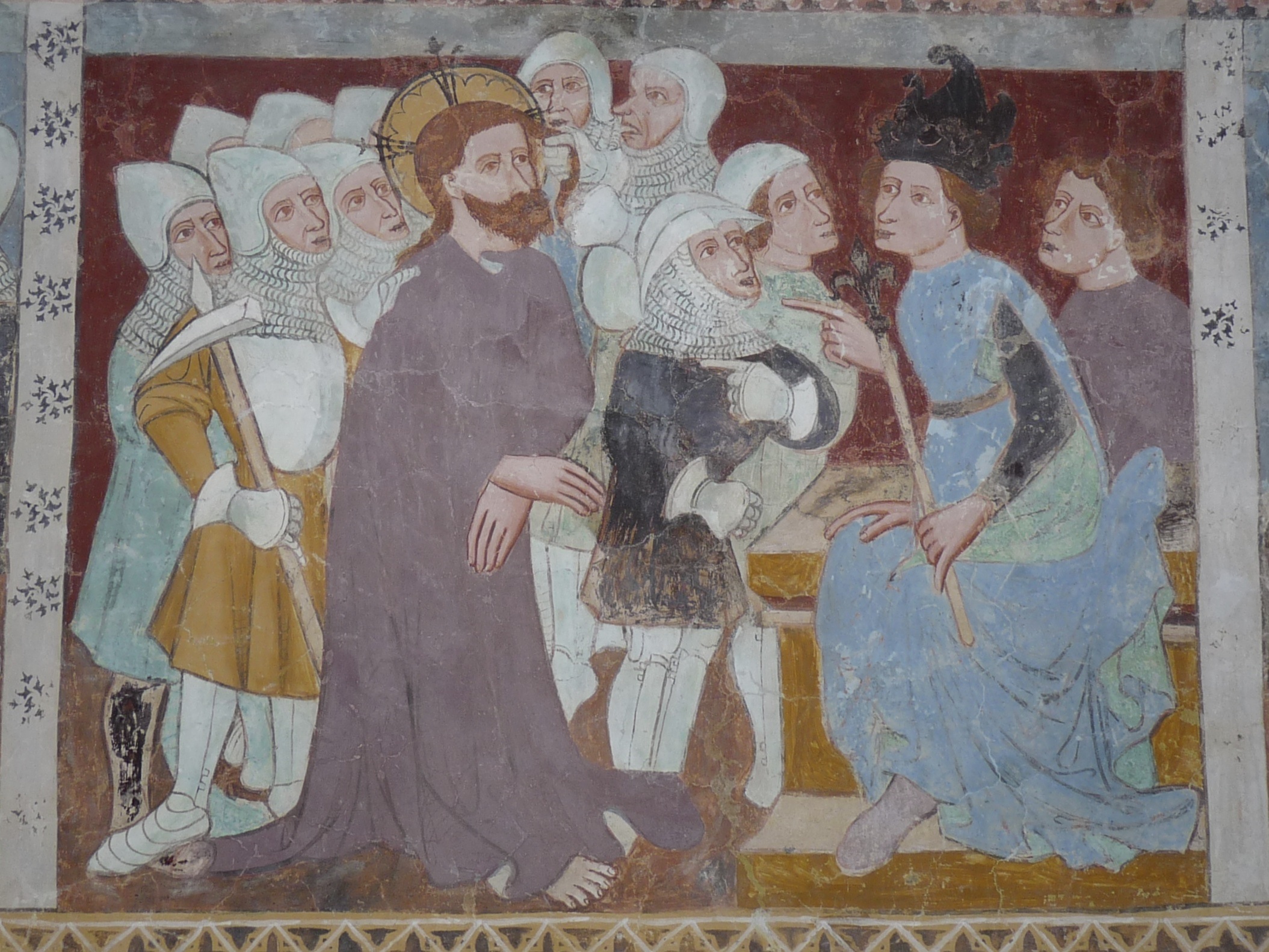
Passionszyklus (Vor dem Hohen Rat), Kirche Tenna, GR, um 1408, unbekannter Künstler
Passion of Christ fresco (before the Council), Kirche Tenna, GR, um 1408, unknown artist

A guarded man with arms crossed at the wrists, and others who speak or deliberate about him, pointing with fingers. There is a clear class difference visible: one barefoot, the other one awarded with insignia. The posture of the simple man expresses confidence; the the powerful, however, has a questioning face and seems to lean forward in order to suggest importance of his arguments. Continue reading “Lenten Meditation #3”

Betrachtung zur Fastenzeit #3

Passionszyklus (Vor dem Hohen Rat), Kirche Tenna, GR, um 1408, unbekannter Künstler

Ein  bewachter Mann mit verschränkten Händen; andere die über ihn sprechen oder verhandeln, mit Fingern zeigend. Es ist ein klarer Klassenunterschied sichtbar: der eine barfuss, der andere mit Insignien ausgezeichnet. Die Körperhaltung des einfachen Menschen drückt Selbstsicherheit aus; der Mächtige hingegen hat ein fragendes Gesicht und scheint sich nach vorne zu beugen um seinen Standpunkten mehr Gewicht zu verleihen. Continue reading “Betrachtung zur Fastenzeit #3”

Lenten Meditation #2

Passionszyklus (Judaskuss), Kirche Tenna, GR, um 1408, unbekannter Künstler
Passion of Christ fresco (Kiss of Judas), Kirche Tenna, GR, around 1408, unknown artist

The brotherly kiss, expressed with an obvious intimacy through the eyes. On one side a bystander who turns away. The colourful group of main characters is surrounded by an over-powering group – cold, harassing, threatening.

Continue reading “Lenten Meditation #2”

Betrachtung zur Fastenzeit #2

Passionszyklus (Judaskuss), Kirche Tenna, GR, um 1408, unbekannter Künstler

Der Bruderkuss, ausgedrückt in den Augen mit einer offensichtlichen Innigkeit; daneben ein sich abwendender Beistehender. Die farbige Gruppe der Hauptfiguren ist im Hintergrund umgeben von einer übermächtigen Gruppe – kalt, bedrängend, bedrohlich.  Continue reading “Betrachtung zur Fastenzeit #2”