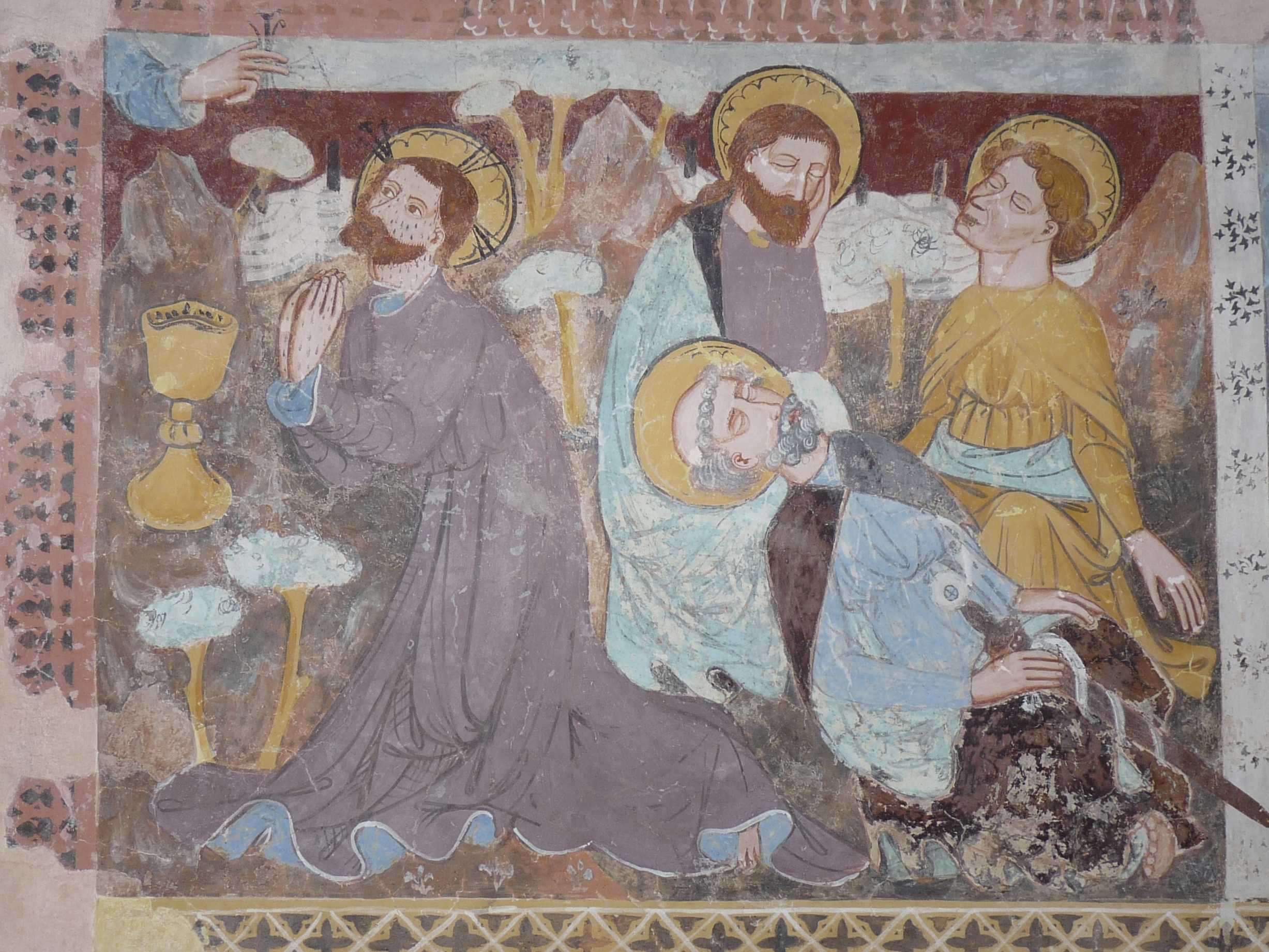
One person is in distress, profusely sweating on his face and on his hands. The others, very close to him, are sleeping – complacent, feeling safe, a sword in hand. Continue reading “Lenten Meditation #1”
One person is in distress, profusely sweating on his face and on his hands. The others, very close to him, are sleeping – complacent, feeling safe, a sword in hand. Continue reading “Lenten Meditation #1”
Einer schwitzt, sorgt und fürchtet sich. Die anderen sind ganz nahe, doch sie schlafen – selbstzufrieden, sich in Sicherheit wähnend, das Schwert bei Fuss. Continue reading “Betrachtung zur Fastenzeit #1”

In a postmodern trend to list anything for publication, I am adding ten attitudes and behaviours that could (hopefully) be endorsed by John Woolman to avoid superfluities. Continue reading “10 complex ways to lead a simple(r) life”
Ganz im Sinne der postmodernen Erscheinung, alles Mögliche in Listenform zu publizieren, führe ich hier zehn Lebenseinstellungen und Verhaltensweisen an, die hoffentlich auch John Woolman vertreten könnte um Überflüssiges zu vermeiden. Continue reading “10 komplexe Weisen ein einfach(er)es Leben zu führen”
What is a Quaker? – a brief, illustrative, and humorous answer provided from the insights of a Quaker scholar.
Excerpt from the 2013 Quaker Study Series at the Canadian Yearly Meeting by Ben Pink Dandelion.
For the full lecture in five parts, please go to the following page: http://vimeo.com/user20788368/videos
Here is the promised link to the final instalments of the study sessions by Ben Pink Dandelion, held in August 2013 at the Canadian Yearly Meeting of the Religious Society of Friends:
for the previous sessions, please follow these links:
“We choose to define ourselves” [ad line]
Healthism is a holistic ideology, which focuses on an individual’s responsibility for his/her health based on informed choice (MacDonald, 1998). Health promotion is deeply embedded in this ideology. Healthism is the culmination of individualistic and consumerist thought, making one’s own body as the sole focus of values and decisions. Health, as a narrowly defined medical standard, and beauty, as expressed in outward physical appearance, become the most important indicators of personal well-being. In combination with these individualistic thinking patterns, the physical environment is being seen as a constant threat to human health and well-being. Society and cultural expression become almost irrelevant in the context of health.
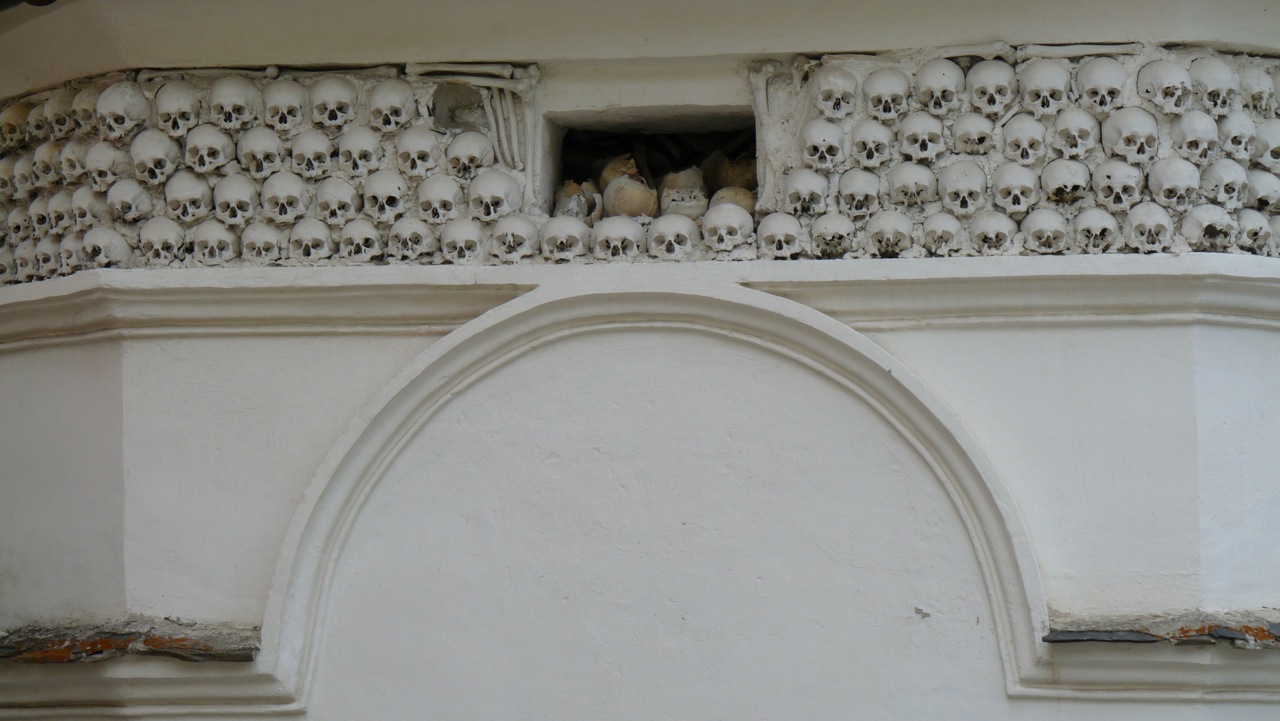
Healthism is an expression of extreme privilege. It makes us believe that we can be creators of our own fate and destiny. Continue reading “Healthism – a war on wholeness”
For an English version of this article, please click here: Healthism – a war on wholeness
„Healthism“ (aus dem Englischen und ungefähr mir Gesundheitswahn übersetzbar) ist eine ganzheitliche Ideologie die darauf aufgebaut ist das jedeR Einzelne, auf der Grundlage von bewussten Entscheidungen, verantwortlich ist für ihre/seine Gesundheit und Wohlergehen. Gesundheitsvorsorge ist mitunter ein wichtiger Teil dieser Ideologie. Healthismus ist eine Kulmination von individualistischen und konsumorientierten Gedankenwelten, die den eigenen Körper ins Zentrum stellt für alle Wertüberlegungen und Entscheidungen. Gesundheit – in der Form eines eng definierten medizinischen Standards – und Schönheit – ausgedrückt in der äusserlichen körperlichen Erscheinung – werden somit die wichtigsten Indikatoren für das persönliche Wohlbefinden. Dazu kommt noch, dass in dieser Denkweise die natürliche Umwelt als konstante Bedrohung für die menschliche Gesundheit und das Wohlergehen angesehen werden. Gesellschaft und Kultur werden beinahe bedeutungslos in dieser Vorstellung von Gesundheit.
Healthismus ist eine Ausdruck von extremen Privilegien. Die Ideologie macht uns vor dass wir die Schöpfer unseres Schicksals und unserer Bestimmung sein können. Continue reading “Gesundheitswahn”
Affluenza: “Konsumismus, auch Konsumerismus oder Konsumentismus (von lat. consumere – verbrauchen), ist ein übersteigertes Konsumverhalten zum Zweck der gesellschaftlichen Distinktion oder des Strebens nach Identität, Lebenssinn und Glück.” (Wikipedia)
Eine satirische Abhandlung über einen potentiellen Ausbruch einer ansteckenden Krankheit in den USA hat mich gerade wieder in der Vorweihnachtszeit stark berührt. Affluenza, ein Begriff der im Englischen tönt wie Influenza (Grippe), ist ein Konstrukt das schon vor einigen Jahren geprägt wurde um aus gesellschaftskritischer Sicht auf unser für normal gehaltenes Konsum- und Sozialverhalten aufmerksam machen.
Hier gibt es eine tolle filmische Umsetzung der Problematik: Kinder und Jugendliche die in einer Überfluss- und Wegwerfgesellschaft aufwachsen haben oft keine Vorstellung, dass nur die wenigsten, auch in unseren Kulturkreisen, derart privilegiert sind. Das Video ist in Australien gemacht; hier eine Version mit deutschen Untertiteln.
Doch es sind ja nicht nur unsere Teenager betroffen von der Krankheit: Die englische Definition des Begriffs verdeutlicht dass viele Erwachsene den Virus auch in sich tragen: Continue reading “Diagnose: Affluenza (Konsumismus)”
Affluenza is a growing problem – not just in the US.
For a definition of affluenza, click here: diagnosis Affluenza
Disassociated Press–Ft. Worth, TX
Centers for Disease Control and Prevention Director Dr Thomas R Frieden released numbers on the current outbreak of affluenza in the US at a press conference Monday morning, painting a chilling picture of the dangers posed to the population, in particular the wealthy.
“The latest affluenza case in Texas merely underscores the need to take steps in the development of preventative measures,” Frieden said to the press, in reference to Ethan Couch. Couch is the Texas teen who barely escaped up to 20 years in prison when his condition was revealed to have caused him to kill four people in a drunk driving accident, paralyzing a fifth person. “A young boy’s life has taken a tragic, irrevocable turn,” Frieden continued. “Ethan Couch’s life will forever center around his treatment. We hope our estimate, which indicates about 3 million or so of the wealthiest Americans could…
View original post 555 more words
Here are the second and third part of a series of study sessions on Quaker theology and history illuminating the “end of the world” topic.
For the first part, you can go to the following blog post: The End of the World – part 1
The following parts are available here: The End of the World – parts 4 and 5
Macht ist die Fähigkeit Einfluss zu nehmen im Leben. Das kann sich sowohl auf das eigene wie auch auf andere Leben beziehen. Wenn ich im eigenen Leben keine Macht habe, dann kann ich mich sehr schnell ohnmächtig fühlen. Das Ohnmachtsgefühl kann natürlich auch daher kommen, dass ich mir nicht bewusst bin, dass ich auf mein Leben Einfluss nehmen könnte.
Lange Zeit wurden Menschen durch autoritäre Figuren und Systeme konsequent in einer abhängigen Beziehung gehalten. Macht wurde schonungslos ausgeübt. Die Machthaber haben das gemeine Volk bewusst im Unwissen gelassen. So auch die Kirchen. Sie haben Gott als den Allmächtigen definiert, was dem Menschen nicht viel Einfluss auf das eigene Leben oder das Leben der Gemeinschaft lässt.
Stellt euch vor, Gott wäre als Alles-Liebende verstanden worden… Continue reading “Was macht Macht mit mir? (+EN)”
A friend of mine, Ion Delsol, operates a website – pasifik.ca – to support a vision of perpetual direct democracy. One of the experimental features is a section called “Now Polling” that is used to assess the will of the people on an ongoing basis. It is Ion’s firm belief that democracy should happen more often than on election day every four years. To read about Ion’s vision, visit this link: Perpetual Direct Democracy (available in Spanish as well).
I was recently asked by Ion to share my views and experiences of the health care system in British Columbia and Canada. The discussion started with a critique of the current health care system. It continued to consider more fundamental factors than bigger and better machines and shorter wait times: Social determinants of health. Income equality, social justice, and political empowerment will make people healthier.
Ion taped and edited the conversation and it will be broadcast on the community cable channel in British Columbia. The interview is also available online on pasifik.ca and YouTube:
Determinants of Health – Part 1
Determinants of Health – Part 2
Are you anxious about global warming, the repeat waves of recession, government shut downs, or any other discernible sign of an impending apocalypse?
The end of the world has been a popular topic for centuries, but none of the doomsday scenarios so far have caught my attention. But I feel inspired by the thoughts and queries shared by Ben Pink Dandelion, a quaker scholar from England.
Here is the first part of a series of study sessions on Quaker theology and history illuminating the “end of the world” topic.
The study sessions took place during the Canadian Yearly Meeting of the Religious Society of Friends in Kemptville, ON in August 2013. I will link to the following instalments of this five part series as they are posted publicly.
‘Living in this intentional community of people with varied abilities was the first step away from a gainful career and towards voluntary poverty.’
Für eine deutsche Übersetzung klicke hier:
Eine einfache Geschichte
Othmar F. Arnold (2012)
My journey started more than fifty years ago in Switzerland. I was born the second child of four to parents who grew up still deeply embedded in the cultural fabric of a conservative Catholic society. The first fourteen years of my life I grew up comfortably and quite sheltered in a small town. My family was the perfect family: dad was working as an engineer (he was the first in his family to benefit from higher education, thus escaping the rural poverty of the peasant life or the hardship of the working class experienced by his forefathers). Mom stayed home after marriage, but before has mastered a professional qualification and has earned a living on her own (this was also a first in her family that had also very recent rural roots – her father was born into a migrant farm worker family with no possessions and very limited rights). They were very proud of their achievements and upward mobility in social class. They also had grand expectations for her children who were to be given all opportunities to make it to the top of modern society.
At age fourteen, I woke up from the dream. Continue reading “One Story of Simplicity – Reimagining the Good Life”

 OFRADIX